My complicated love affair with David Bowie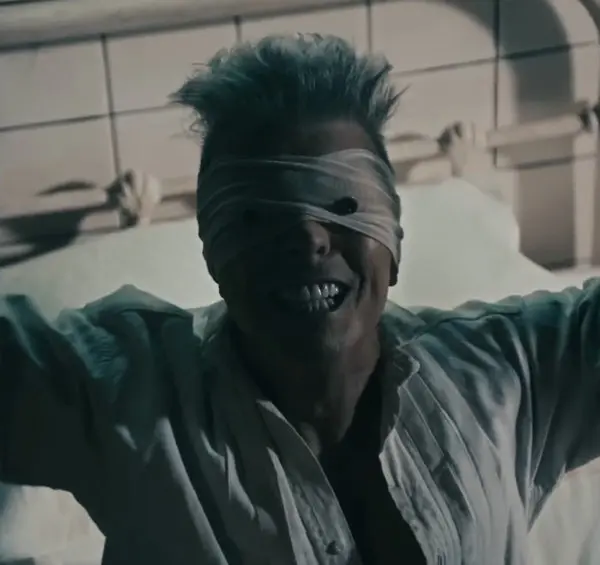 Review of David Bowie's music, by Stefan Stenudd
I was rather late discovering him. It was with his 1975 album Young Americans, which he later almost frowned upon. I was hooked. That soulish extravaganza was like a revival of the golden years of Motown, but with enhanced sophistication and intensity. There was delight as well as pain in a confusing mix all through. The paradox of true art. And the lyrics were real food for thought. Consider the opening lines of the title song:
He lays her down, he frowns "Gee, my life's a funny thing, am I still too young?" He kissed her then and there She took his ring, took his babies It took him minutes, took her nowhere Heaven knows, she'd have taken anything.
Favorite songs and lyricsHere are some of the highlights, going backwards:“Sweet Thing” and “Candidate” from Diamond Dogs, 1974. I learned the intriguing poetry by heart, and still remember most of it. Such poetry! But returning to it now, I find that I might have misunderstood these favorite lines:
Makes me feel important and free Does that make you smile, isn't that me?
“Time” from Aladdin Sane, 1973, where he challenged the ridiculously prude censorship upheld in popular culture with these lines:
Falls wanking to the floor His trick is you and me, boy.
But she knows she really loves him
You're watching yourself But you're too unfair You got your head all tangled up But if I could only make you care Oh no, love, you're not alone No matter what or who you've been No matter when or where you've seen All the knives seem to lacerate your brain I've had my share, I'll help you with the pain You're not alone
As they try to change their worlds Are immune to your consultations They're quite aware of what they're goin' through
Oh, man, look at those cavemen go It's the freakiest show Take a look at the lawman Beating up the wrong guy Oh, man, wonder if he'll ever know He's in the best-selling show Is there life on Mars?
Or herald loud the death of Man I'm sinking in the quicksand of my thought And I ain't got the power anymore Don't believe in yourself, don't deceive with belief Knowledge comes with death's release
With all the madmen Than perish with the sad men roaming free And I'd rather play here With all the madmen For I'm quite content they're all as sane as me
Who spoke of many powers that he had Not of the best of men, but ours We used him We let him use his powers We let him fill our needs Now we are strong And the road is coming to its end Now the damned have no time to make amends No purse of token fortune stands in our way The silent guns of love Will blast the sky We broke the ruptured structure built of age Our weapons were the tongues of crying rage
But the song that really got to me was the last track of the album, “Memory of a Free Festival.” It’s a sweet little thing that seems rather insignificant, but the more I listened to it, the more it mesmerized me. It’s about carefree youth, sunshine, and pure joy, but also about the sad impermanence of it all:
Of holding each and every life We claimed the very source of joy, ran through It didn't, but it seemed that way I kissed a lot of people that day Oh, to capture just one drop of all the ecstasy That swept that afternoon
And we're gonna have a party
Concert complicationI was lucky to find that my newfound idol was coming to my hometown Stockholm for the first time the very next year, 1976, for a concert. I got a ticket and even a friend to drive me there, but I had one problem in the midst of my anticipation.I had seen in the press about his tour that the concert started by showing a horrible scene from An Andalusian Dog, by Luis Buñuel and Salvador Dalí. I’m even hesitant to be more specific about it. If you know, you know. And I had wrestled since childhood with panic attacks usually initiated by gore of that type. I was counting on getting one at the concert. So, was it worth it? I thought it was, but on the way there I succumbed to the rising trepidation and skipped the concert. My friend couldn’t understand why, and I didn’t feel like explaining. So, I had to wait until Bowie’s next visit, in 1978, to see him live. I remember being surprised by how much of a rock groove he got out of songs from the somber Low album. Several other concerts followed during the 1980s and 1990s. The last one was in my present hometown Malmö in the south of Sweden, where he performed in 1997.
The rock curseBowie had more concerts in Sweden later on, but I didn’t care.Why? Honestly, I had seen a decline in his music after the 1970’s. What had attracted me from the start was the sort of adolescent anguish he expressed, but as he grew older it was increasingly replaced by adult composure, a deepened and schooled voice, and alienated covers of his old hits. Sometimes his performances shone, I could see on YouTube clips, but mostly he performed in a laid back style as if wanting to distance himself from the old songs – while still having to do them to please the audience. I even stopped listening to his new albums. The last one I bought was Tonight from 1984. Well, I also got the first Tin Machine album from 1989, but I’m not aware of ever playing it. I think it’s the blessing and curse of rock music. It expresses the turmoil and anguish of adolescence, the teenager about to metamorphose into an adult. That’s a death of sorts, and it’s not painless, not at all. Look at all the aging rock stars touring the world with their hits of old. Any new material is merely tolerated by their audiences – if they mainly repeat the songs everybody can sing along to. It must be frustrating to the artists. Their careers had all but ended with the music of their young years, and what remains for them is basically little more than karaoke. They sing about an anguish that they have long ago overcome, simply by growing out of it. Frankly, they have to fake it. Off the top of my head, I can only think of one exception to that rule. It’s a Swedish rock singer, Joakim Thåström, who had his breakthrough in a late 1970s punk band and has been able to sing those songs as well as many new ones from later eras of his artistic process with the same authenticity and sincerity. And it works on every new generation of audiences. It’s a mystery, and my guess is that it’s because of his total refusal to compromise, to adapt. He keeps singing from the scars he got in youth. They never healed and he didn’t flee from them. Only if you’re willing to recognize and befriend what you once felt can you feel it again. It doesn’t make you happy, but it keeps you real. David Bowie could not. He preferred growing out of it and escape the anguish. Who could blame him? But that’s not the nature of rock ‘n’ roll. If you leave it you lose it.
Grand finaleSo, I became estranged from my idol and for years I just had short glances of what he was up to. Every time, I got the feeling of listening to adult karaoke, and the new music he made sounded intellectual and pretentious to my ears. I thought he was lost for good. A has-been, like all the other old rock stars.Years passed. In November 2015, a new song and video with David Bowie called “Blackstar” was released. I had no hopes for it, so several weeks passed before I checked the video on YouTube. I found the song and the video to be the same intellectual and pretentious stuff I had experienced repeatedly coming from him. And it was a long one. Still, to my own surprise I found myself watching the whole ten minutes of it. Normally, I would stop such stuff after less than a minute. It confused me. Why had I watched the whole thing, although it was the same disappointment as so much else from him the last thirty years or so? That got me curious. On January 7, 2016, the “Lazarus” video was released. This time I hurried to watch it, and again I was quite ambivalent. But it did grab me and shake me. The lyrics were rather cryptic, yet obviously autobiographical. And the song title spoke volumes. This was about death. I thought he probably contemplated his own mortality, but I don’t remember if I got the impression that it was imminent. Well, the album was released on January 8, his birthday, and two days later he was dead. He had made a farewell album. An artist to the end. And sort of a Lazarus, too. Rising from the death of past glory to perform a grand finale. That’s the David Bowie I love to remember.
Stefan Stenudd January 10, 2026
Click here for more reviews
About CookiesMy Other WebsitesCREATION MYTHSMythology in general and creation myths in particular.
TAOISMThe wisdom of Taoism and the Tao Te Ching, its ancient source.
LIFE ENERGYAn encyclopedia of life energy concepts around the world.
QI ENERGY EXERCISESQi (also spelled chi or ki) explained, with exercises to increase it.
I CHINGThe ancient Chinese system of divination and free online reading.
TAROTTarot card meanings in divination and a free online spread.
ASTROLOGYThe complete horoscope chart and how to read it.
MY AMAZON PAGE
MY YOUTUBE AIKIDO
MY YOUTUBE ART
MY FACEBOOK
MY INSTAGRAM
STENUDD PÅ SVENSKA
|
 Ever Young