Vecna is a victim, not the villain, in Stranger Things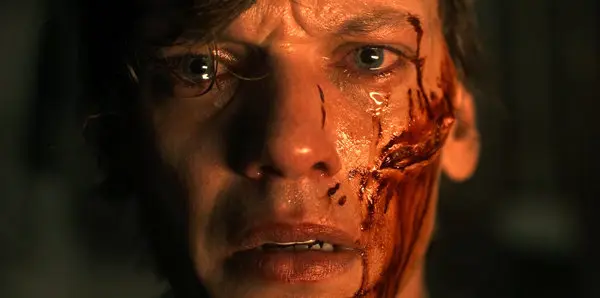 Review of the Stranger Things finale (2025), by Stefan Stenudd
Will should know, since he has also been a victim of the same scheme. Although Vecna refuses to admit this, it is evident already in the traumatic events from his childhood, when his transformation began. His denial only confirms that he is unable to face the truth. This makes the drama much more fascinating than a mere good guys versus bad guy plot. The villain is controlled by another villain of superior power.
The true antagonistIs Vecna really a villain? Only if he is able to freely choose sides. He thinks so, but the dialogue with Will strongly indicates that he is not. So does Vecna’s tearful, tortured, and desperate face, as seen on the image above.That’s the ultimate tragedy of the whole story. Its major antagonist, the enemy to be defeated, has already been defeated and enslaved by the Mind Flayer, but refuses to see it. So, he dies. But that makes the Mind Flayer the true antagonist of the drama. Vecna is just another of the Mind Flayer’s victims. He could even be regarded as a protagonist of sorts, albeit failing at the end. If he accepted the truth he might even end a hero. That may have been a more intriguing drama, but still a tragedy because of all the harm he has caused. When the cost is that high it has to end in death, protagonist or not. But it also means that the true antagonist must die as well, otherwise the story would utterly disappoint the audience. Aristotle made that clear in his Poetics, where he presented the rules for drama. And indeed, the Mind Flayer dies too – at the same time as Vecna does. Justice is reached. By that, the drama is really over. Not in Stranger Things, though, where the final episode goes on for an hour more. That’s far too much for an aftermath. When it takes so long to tie up all loose ends, the script needs a rewrite.
Jamie Campbell Bower was splendidIt must be added that Jamie Campbell Bower played Vecna splendidly through all the character’s phases, from his late introduction into the Stranger Things story (in season four) to the end.The intriguing nuances and shifts of his face and voice were both convincing and mesmerizing – more so than the spectacular special effects of the show. It’s particularly remarkable since he was introduced so late in the drama – normally far too late for a character to make this much of an impression on the audience. Imagine what it would have done to the story if he was present from the start of it! It really felt like he was, once he appeared. Actually, season four and five would have done fine without the previous seasons. It would make the drama tighter and more intense. Less is more.
Or WillThere are two other protagonist candidates in Stranger Things: Will, who overcomes his fear and thereby finds his power, and Eleven, who realizes that she must disappear to end it all.Strictly speaking, Will is the more fitting protagonist since he has struggled so hard to finally overcome his weaknesses. Eleven is more of a traditional hero character, since she has always been able to make any sacrifice and leaves when she is not needed anymore. Will remains.
No finaleEleven’s disappearance is uncertain, which looks suspiciously much like a backdoor to sequels.That’s a plague in the film and TV world. It breaks the rule about the ending firmly stated by Aristotle: nothing of significance should come after it. Otherwise the story is simply not finished, and that’s detrimental to any story. Because of that, the last episode of Stranger Things was not really a finale. Well, putting an end to a success of this magnitude takes even more courage than what Eleven and her friends showed.
Stefan Stenudd January 4, 2026
Click here for more reviews
About CookiesMy Other WebsitesCREATION MYTHSMythology in general and creation myths in particular.
TAOISMThe wisdom of Taoism and the Tao Te Ching, its ancient source.
LIFE ENERGYAn encyclopedia of life energy concepts around the world.
QI ENERGY EXERCISESQi (also spelled chi or ki) explained, with exercises to increase it.
I CHINGThe ancient Chinese system of divination and free online reading.
TAROTTarot card meanings in divination and a free online spread.
ASTROLOGYThe complete horoscope chart and how to read it.
MY AMAZON PAGE
MY YOUTUBE AIKIDO
MY YOUTUBE ART
MY FACEBOOK
MY INSTAGRAM
STENUDD PÅ SVENSKA
|
 Ever Young