Psychoanalysis of Myth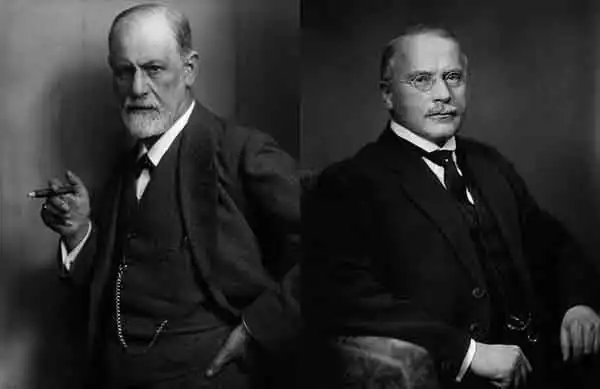
Freud's and Jung's Theories on Myth and Its Origin.
1 IntroductionThe psychoanalytical perspective on myth was unavoidable. When the study of myths and religions intensified through the 19th century, patterns of them were extracted and compared, and theories on what they revealed about common human conditions emerged. Myths were increasingly seen as expressions of needs in the human psyche.
As such, they were rewarding fields of study of human nature, especially since there was a quickly growing mass of documentation of myths from around the world, as well as a quickly increasing knowledge of religions and traditions among distant and obscure cultures. By the end of the 19th century, the literature on the subject was already immense, and mostly pointing to psychological explanations for the structure and content of myths, as well as for the birth of religions. To name a few: Scottish Anthropologist James George Frazer's The Golden Bough, presenting a vast material on myth, lore and ritual around the world, was originally published in 1890, as a two volume work, in the following decades to expand considerably. Scottish writer Andrew Lang's two volume Myth, Ritual and Religion preceded it by just a few years, published in 1887. English anthropologist Edward Burnett Tylor's Primitive Culture: Researches into the Development of Mythology, Philosophy, Religion, Language, Art and Custom was published in 1871, but he had written Researches into the Early History of Mankind on the same theme in 1865. The German philologist and orientalist Max Müller, regarded as the initiator of comparative religion, and becoming Oxford's first professor of comparative theology in 1868, edited the 50 volume Sacred Books of the East, published 1879-1910. There were also journals of anthropology published since the mid-1800s, often containing documentation of myths and rituals in cultures without their own writing. This fast growth of interest in the traditions of other cultures was taking place rather simultaneously with the establishment of the science of psychology, and they influenced each other continuously. Anthropologists used psychological concepts to analyze and explain beliefs and religious practices of societies they studied, and psychologists searched anthropological material for support to their theories about the mental nature of man. This is still the case. The two persons so far most influential in the psychological treatment of myth are Sigmund Freud and Carl Gustav Jung, the latter to a much wider extent than the former. Since both were connected to the psychoanalytical movement, and their perspectives on man and myth search deeper into the psyche than mere emotions or instinctive stimuli, we could call their thoughts on myth psychoanalytical. The term depth psychology is often used in this framework, but that would imply an existence of a shallow counterpart, which can be questioned, and it also suggests a grading of the components of the psyche that is theirs, but not necessarily shared by other psychologists. By psychoanalytical perspectives on myths, I simply point out Freud, Jung, and their followers. For the 20th century, this line of theorists is so clear, it can be followed without any significant complications or alterations. For the future, though, it is sure to lose some of its clarity, since both Freudian and Jungian ideas about myth are increasingly questioned and altered in differing directions, where not altogether abandoned.
NEXTSigmund Freud
Psychoanalysis of Myth
This article was originally written in 2006 for a seminar at the Department of History of Ideas, Lund University, as a part of my dissertation in progress on Creation Myths and their patterns of thought. Transforming the text to webpages, I have excluded footnotes. Published on this website September 10, 2007.
MYTH
IntroductionCreation Myths: Emergence and MeaningsPsychoanalysis of Myth: Freud and JungJungian Theories on Myth and ReligionFreudian Theories on Myth and ReligionArchetypes of Mythology - the bookPsychoanalysis of Mythology - the bookIdeas and LearningCosmos of the AncientsLife Energy EncyclopediaOn my Creation Myths website:
Creation Myths Around the WorldThe Logics of MythTheories through History about Myth and FableGenesis 1: The First Creation of the BibleEnuma Elish, Babylonian CreationThe Paradox of Creation: Rig Veda 10:129Xingu CreationArchetypes in MythAbout CookiesMy Other WebsitesCREATION MYTHSMythology in general and creation myths in particular.
TAOISMThe wisdom of Taoism and the Tao Te Ching, its ancient source.
LIFE ENERGYAn encyclopedia of life energy concepts around the world.
QI ENERGY EXERCISESQi (also spelled chi or ki) explained, with exercises to increase it.
I CHINGThe ancient Chinese system of divination and free online reading.
TAROTTarot card meanings in divination and a free online spread.
ASTROLOGYThe complete horoscope chart and how to read it.
MY AMAZON PAGE
MY YOUTUBE AIKIDO
MY YOUTUBE ART
MY FACEBOOK
MY INSTAGRAM
STENUDD PÅ SVENSKA
|
 Archetypes of Mythology
 Psychoanalysis of Mythology