stenudd.COM
Stefan Stenudd           Author, Artist, Aikido instructor
MYTH
Myth of Creation
The Logics of Myth
Psychoanalysis of Myth
Genesis 1: The first creation of the Bible
Enuma Elish: Babylonian Creation
Cosmos of the Ancients
Aristotle - life and work
Aristotle's Poetics
Ideas and learning
The Taoist source
About the writer

Psychoanalysis
of Myth

  1. Introduction
  2. Sigmund Freud
  3. Totem and Taboo
  4. Moses and Monotheism
  5. Carl G. Jung
  6. Archetypes
  7. Collective unconscious
  8. Applying Jung to myth
  9. Personal myth

Books by Stefan Stenudd:
Cosmos of the Ancients, by Stefan Stenudd.
COSMOS OF THE ANCIENTS
The Greek philosophers' theories about the gods, the myths, and cosmology.
More about the book here.


Murder, by Stefan Stenudd.
MURDER
Thoughts on life, death, and the meaning of it all - by Stefan Stenudd.
More about the book here.


All's End, by Stefan Stenudd.
ALL'S END
A science fiction novel by Stefan Stenudd, about the quest for a perfect world.
More about the book here.


QI - increase your life energy.
QI
Increase your life energy
The book about the life energy qi, with exercises on how to awaken and use it.
More about the book here.

Aikido - the book by Stefan Stenudd.
AIKIDO
The Peaceful Martial Art
The book about aikido principles, philosophy and basic concepts.
More about the book here.

Aikibatto - the book.
AIKIBATTO
The book about the aikibatto sword and staff exercises, practical and spiritual aspects of the sword arts, equip­ment for training, etc.
More about the book here.


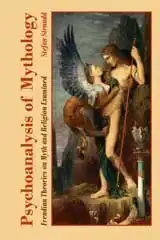
Psychoanalysis of Myth: Freud and Jung.

Psychoanalysis of Myth

Freud's and Jung's theories
on myth and its origin.

This article was originally written in the year 2006 for a seminar at the Department of History of Ideas, Lund University, as a part of my dissertation in progress on Creation Myths and their patterns of thought. Transforming the text to webpages, I have excluded footnotes.
Published on this website September 10, 2007.

Jung's Collective Unconscious

J ung's idea of archetypes existing and remaining in some kind of human awareness through generations, independently of time and place, calls for an explanation similar in kind to Freud's theory of an archaic heritage, mentioned above. That was also what Jung started with, but he continued to develop a solution of his own, the collective unconscious – which is not that different at all from Freud's concept.

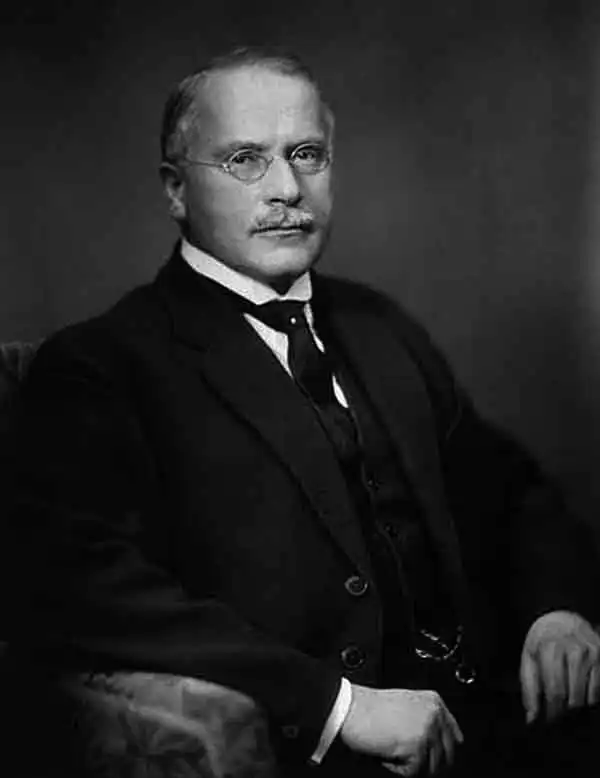
Carl G. Jung.
Carl G. Jung.

     Each person has an unconscious, part of it very personal indeed, and part of it is the same for all human beings. This part is the collective unconscious, where the archetypes are stored. It is simply the part of the unconscious, which does not come from personal experience. The personal unconscious contains such material as actual personal memories and experiences that have been forgotten or repressed, and the rest belongs to the collective unconscious. Jung did not see this as any sort of telepathic dimension with ability to reach out of a person's mind. To him it is more like an imprint, something inherited by all, along the line of animal instincts. This is also how Freud saw the archaic heritage.
     Somehow instincts progress and adapt in animals, as they change by evolution and their needs alter according to changes in their surroundings. Otherwise their instincts would soon be their doom instead of their support in survival. Therefore, some kind of evolution of instincts is possible. Jung imagines a similar development of the human brain, as the means by which the collective unconscious appeared and was filled with archetypes. To Jung, the complexity of the human mind allows for that additional and more refined set of instincts which is the collective unconscious.

The hypothesis of the collective unconscious is, therefore, no more daring than to assume there are instincts.

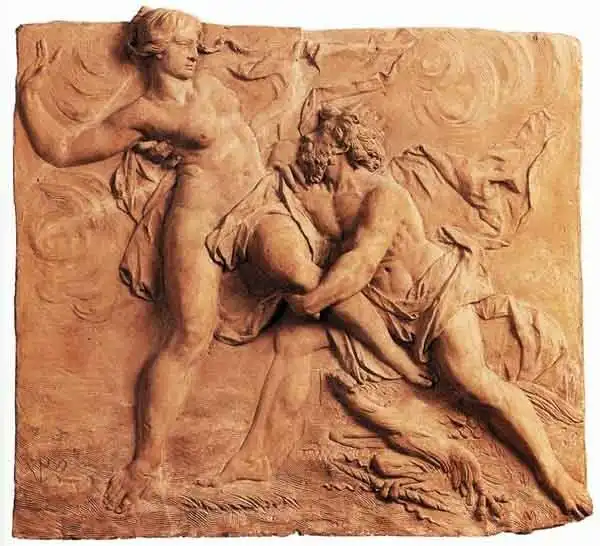
Pluto abducts Persephone, by Jan Peter van Baurscheit the younger.

     The archetypes give examples of this, since many of them obviously relate to phenomenons that all people have in common – such as the mother, the child, life and death. Jung insists that archetypes are shared by all, and not just people of one culture or one time period. Therefore, he must mean that what cannot be grasped or recognized by every human being, is not an archetype. So, the idea of the collective unconscious creates a definite border for what are archetypes, and what are not. They must relate meaningfully to all human beings. With some of the archetypes Jung specified, that is not so obvious – they are rather limited to his own European and Christian background. Still, if he makes mistakes in applying his theory, it does not necessarily mean that the theory is faulty.
     To Jung, the collective unconscious seems to have little else to do than store the archetypes, which are the instruments for any person to reach self-realization in the individuation process. Archetypes are essentially all that the collective unconscious consists of. What is kept there is in the form of archetypes, as if this is the way for the unconscious to code such parts of itself.
     Myths are born out of the collective unconscious, therefore made up of archetypes. To Jung, they are little more than expressions of that part of the psyche: "In fact, the whole of mythology could be taken as a sort of projection of the collective unconscious." Dreams, on the other hand, come from the personal unconscious, and cannot become myths, because of their personal nature. Whereas the personal unconscious is unable to influence the collective unconscious, the reverse is possible:

The collective unconscious influences our dreams only occasionally, and whenever this happens, it produces strange and marvelous dreams remarkable for their beauty, or their demoniacal horror, or for their enigmatic wisdom – "big dreams," as certain primitives call them.

     So, Jung's collective unconscious is an inherited part of the psyche, a fundamental driving force, a container of great truths, and the only trustworthy guide to self-realization. Yet, it is hidden in the depth of the mind, unknown to man. Myths are the instruments to discover and to utilize it.


Psychoanalysis
of Myth

  1. Introduction
  2. Sigmund Freud
  3. Totem and Taboo
  4. Moses and Monotheism
  5. Carl G. Jung
  6. Archetypes
  7. Collective unconscious
  8. Applying Jung to myth
  9. Personal myth

© Stefan Stenudd 2006


Search Amazon for books about Jung:

You are visitor n:o since September 10, 2007.


Instant review

Express your view, with grades and/or your own words.
Your name:
Your email:

Grade:
1 boring
2 nothing special
3 ok
4 stimulating
5 fascinating

RESPONSE:


Cosmos of the Ancients, a book by Stefan Stenudd. Cosmos of the Ancients
This book tells what the Greek philosophers thought about the myths, the gods, and cosmos. What they lacked in scientific knowledge, they compensated with brilliant reasoning. Written by Stefan Stenudd.
Buy the book at Amazon.

More about the book here.

Stefan Stenudd
To top page:

stenudd.com


Tao Te Ching - the Taoist source.
TAOIST SOURCE
The Taoist source. The complete Tao Te Ching and Chuang Tzu.


More on this website:
Aikido
Aikibatto sword exercises
Myth
Greek Philosophers
Aristotle and his Poetics
The Taoist source
Qi - life energy
Fiction by Stenudd
Art by Stenudd
Astrology and horoscopes