The book:
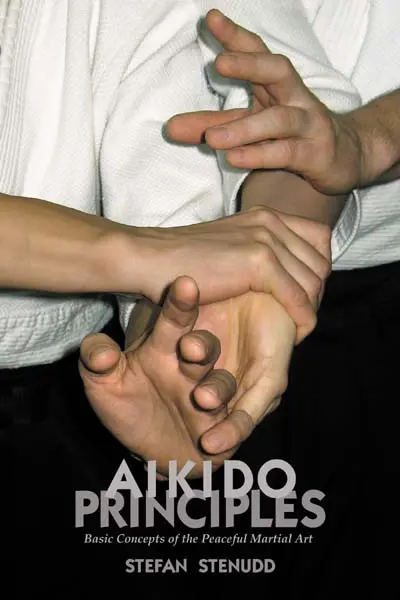
Aikido Principles
Basic Concepts of the Peaceful Martial Art,
by Stefan Stenudd
Aikido is a martial art unlike any other. It contains no attacks, only defense, and this defense should be so gentle that even the attacker is delighted by it. There is no competition, since each participant should be a winner. It's an art that takes a lifetime to learn.
There are many books about aikido. None of them is enough for learning this gentle martial art. Still, one day I felt I had to write one, too. But I focused on the ideas, principles and theories behind aikido — not at all a manual on how to do the techniques. That has to be practiced in the dojo. A book is for thoughts, so I wrote one about what thoughts lie behind aikido and its practice.
Click to see the book at Amazon >>>
Transmitting ideas
I had the fortune of practicing for a very talkative aikido teacher, when I was new to it. His name was Toshikazu Ichimura and he was the national instructor in Sweden. He explained the philosophy and mythology in the tradition from which aikido had sprung.
Other experienced teachers have done the same. I found these perspective of tremendous importance when trying to understand and improve in aikido.
Since I'm a writer by profession, it was unavoidable that I had to write a book about aikido sooner or later. That happened later — after twenty years of training.
I guess it took so long because humility is part of what we learn in this martial art. I doubted that I would have something of any value to contribute. I was even unsure if a non-Japanese aikidoka was at all equipped to do it.
Well, what I found was that I had learned so much from my teachers, actually also from my students, I needed not to be concerned. What we lack in wisdom, we can compensate by experience. So, I focused on transmitting the thoughts and perspectives I had been taught.
That's what it's all about. We learn, and we pay back by passing the knowledge on.
So, much to my surprise the book was a delight to write. Even more surprising was the kind reception it got when published.
The first edition was in Swedish, printed in 1992. I hesitated again about writing an English version, although many aikido friends from other countries urged me. It took me another 16 years.
Aikido is an art. That means people practicing it are artists. The more of them expressing their experience in writing, the better. There's a lot of aikido books published so far, but there's still room for a lot more.
The Book
Aikido Principles presents the principles and basic concepts of aikido – deeply rooted in Eastern philosophy and the refined ideals of the samurai. It's not a technical manual, but an exploration of the thoughts and theories at work in aikido practice.
It's divided into three parts. The first one deals with aikido ideas of finding the peaceful solution, of doing away with conflict, and how to enjoy aikido practice to the fullest. The second part presents the basic Japanese concepts at work in aikido, such as do, the way, ki, life energy, tanden, the center, the polarities of irimi/tenkan and omote/ura, the significance of maai, aiki, kinagare, takemusu, and so on.
There's also a substantial chapter about kototama, the spiritual cosmology of sounds that was central to Osensei. The third part is an appendix, including an aikido glossary.
There are no instructions on how to do ikkyo, shihonage, and the other aikido techniques. That you find on this website, instead. The book focuses on aikido theory, but in a way that should be readily applicable in practice. Let's say that it's a book about how you should think when you practice aikido.
With the right mind your aikido will improve, all by itself. But only by practice, lots of practice.
The book has previously been published with the title Aikido: The Peaceful Martial Art.
How to get the book
If you want to buy the book, you can do so at most Internet bookstores. Click the image below to see the book at Amazon (paid link). The link takes you to your local Amazon store (or to Amazon.com).


Click the header to visit the book's Facebook page.
Table of Contents
Here is the book's table of contents:
Aikido is true 9
Aikido principles 11
The impossible martial art 12
No opponent, no battle 19
Morihei Ueshiba’s path 22
Water, air, and vacuum 25
Sooner like the youth 31
Female advantage 36
Throw away 40
To know or to learn 45
Here and now 51
A shared journey 53
That self-defense thing 56
Delight 61
Aikido basics 63
Do – the way 64
Ki – life energy 69
Ai – harmony 78
Triangle, circle, and square 82
Tanden – the center 84
Aiki – rhythm and direction 89
Kiai – gathering power 94
Kamae – the perfect guard 99
Kokyu – belly breathing 105
Maai – the safe distance 111
Irimi, tenkan – inward, outward 114
Omote, ura – front, back 116
Gotai – static training 119
Jutai – soft training 122
Kinagare – flowing training 125
Zanshin – extended spirit 128
Uke – the one who is led 132
Keiko – practice, practice, practice 137
Takemusu – limitless improvisation 139
Nen – one with the moment 142
Kototama – the soul of words 146
Appendix 163
Osensei’s rules for training aikido 164
Budo Charter – the Japanese rules 166
Glossary of aikido terms 169
Aikido websites 187
The impossible martial art
A Chapter from the Book
Budo is the collective name for all the Japanese martial arts, such as judo (wrestling), karatedo (punches and kicks), kendo (fencing), iaido (solo sword exercises), kyudo (archery), jodo (staff), and many more. Aikido also has its origin in Japan, and shares a number of traits with other types of budo.
Certainly, each of the Japanese martial arts has its own technical and theoretical characteristics, but also with this in mind aikido has got a place all its own. Most of the aikido characteristics happen to be negations: In aikido there is no competition, no attack techniques, no opponent, no force needed, no shortcut possible. It is difficult to learn, even in its most basic movements, and few are those who have learned to master aikido or parts thereof – even after having studied it for decades.
So, it makes sense to regard aikido as close to impossible. The way is long between the short moments when one’s movements don’t feel clumsy, and even longer until there are moments where one also feels in harmony with the movements of one’s training partner. Therefore it is of some surprise that there are people who try it.
Well, those who stick to aikido – and they are not overwhelmingly many – seem to be attracted to the difficulties and all the negations mentioned above. Our modern world offers all too many trophies that are easily caught, with glimmering surfaces but grayish content. You soon learn to set your hope on those surfaces that do not glimmer, even to the point of almost being repulsive. Perhaps they have a very different content.
Although aikido has a number of techniques and forms of training, these visible things are just the tip of the iceberg. It is the content that is really vast, and makes the training increasingly difficult, the more one progresses. The beginner might sense it, but has no chance of realizing the complexity of aikido. It shows itself gradually, like a landscape opens and widens, the higher the altitude is from which it is observed.
Aikido people
Of those who try one aikido class, a minority returns for a second class, and only a few continue after one semester. On the other hand, those few tend to keep aikido for the rest of their lives – without ever feeling that they master the art, without ever getting fed up with its content. This group is one of its very own kind.
Probably, any hobby or sport tends to gather people who are of similar character. That might even be one of the most important functions of a collective pastime, no matter what its nature is. Nonetheless, aikido attracts its own kind of people. If this were not the case, aikido would soon lose its nature.
We live in a world where we are crowded with many more people than we are able or willing to get to know. In anthropology, man is seen as a flock animal. During most of our history, we have lived in small societies with about eighty individuals or less. That’s what we are configured for. The modern world forces us instead to live in great herds, as if we were sheep.
Many of the emotional disturbances in the psyche of modern man stem from this situation. Unconsciously, we strive to surround ourselves with a group of people that is similar to the little flock, and we try to ward off the rest of the world and its population.
Therefore, we need methods to find those smaller groups, preferably those that contain people we can relate to, people who are similar to us – maybe even sibling souls, if that is possible. The more odd a pastime is, the more homogenous a group will gather in it. The exact nature of that homogeneity can be hard to perceive, but it is there.
People who practice aikido usually describe themselves as dreamers, and contemplative minds. They never choose words such as athlete or fighter. Although they practice a martial art, they usually regard themselves as pacifists, and violence has no place in their hearts. Accordingly, the ideal in aikido is not to win in battle, but to prevent it from even commencing – yes, to do away with violence itself.
Aikido is definitely much more than a sport, and as a martial art it is more about peace than about war. Its practitioners, although far from perfect, are proof of this.
Three years on a stone
In Japan it is a well-known fact that at the outset the student has no way of knowing what the teacher can give, nor if the teacher’s methods are the most suitable. It takes three years, they say, for the student to learn enough to decide if the teacher suits him or her. Only at that point is the student mature enough to choose whether to stay with that teacher, or leave to find another.
The one who makes that decision before three years have passed is bound to get lost. If you hurry on from teacher to teacher, from one art to the other, you will never learn anything more than what you knew to begin with. You cannot see more. For such a student, the most impressive teacher is the one whose ability is the closest to that of the student, and the finest art is the one showing no more than the student is already familiar with.
At first, we can only have an inkling of higher qualities, and it is precisely this vague sense that is the only trustworthy guide for the beginner. We go where we are tempted by our vague sense, our intuition, and we remain there until we fully understand what compelled us to go there. Then we can move on, if we like.
That should take something like three years.
An old Japanese proverb says: “Even on a stone – three years.” It means that even something as seemingly simple as sitting down on a stone takes three years to learn. If you can concentrate on each task in life with this insight, with this willingness to study diligently – then you are sure to gain impressive abilities.
The proverb actually admits that after those three years, you really can sit on a stone. Many teachers, who want to bind their students with lifetime contracts, are reluctant to reveal this consequence of the proverb. Keeping the students in a state of confusion might benefit the teacher who has no higher thoughts about his or her own abilities. Students caught in this type of web don’t learn much even in thirty years.
It would be going too far to say that anything could be learned in three years. Certainly not aikido. But when that period is completed, one should be able to ascertain how much is to be found in that which has been studied. You have neither become an equal to your teacher, nor a master of your art, but you can envision how far your teacher and your art can take you on the path of life.
Samples
Here are two short chapters from
Aikido Principles, as Acrobat PDF files in computer screen resolution (72 DPI):
Here and Now
Kinagare — flowing training
About me
I started to practice aikido in 1972, when I was 18 years old. Now, I'm 7 dan Aikikai Shihan, member of the Swedish Aikikai Grading Committee, former Vice Chairman of the International Aikido Federation and President of the Swedish Budo & Martial Arts Federation. I teach aikido and iaido at the dojo Enighet in Malmo, Sweden, and at seminars in Sweden and other European countries.
Outside the dojo I'm a writer and historian of ideas. I've written a number of books in Swedish and English, both fiction and non-fiction. Among the latter are books about aikido and aikibatto, a guide to the life force qi, and a Life Energy Encyclopedia. I've also published a translation and commentary of the Chinese classic Tao Te Ching. In the history of ideas I study the thought patterns of creation myths, as well as Aristotle's Poetics.
My other aikido books are Attacks in Aikido and Aikibatto: Sword Exercises for Aikido Students.
Aikido Principles
Basic Concepts of the Peaceful Martial Art
by Stefan Stenudd
Arriba Publ., 2008, 2016
Paperback, 188 pages
ISBN: 978-1-5331-4237-5
In German, Swedish, and Czech
This aikido book was originally published is Swedish. It has also been translated to German and Czech. Here are links to those versions:
My Aikido Books
Click the images to see the books at Amazon (paid link).
Basic Concepts of the Peaceful Martial Art. The basic principles, philosophy and traditional budo concepts in aikido.
More about the book here.
How to do kogeki, the attack techniques. All the attack techniques in aikido explained, and how to do them correctly.
More about the book here.
Aikiken Sword Exercises for Aikido. The aikibatto exercises, practical and spiritual aspects of the sword arts, advice on equipment for training.
More about the book here.
|
Aikido Menu
AIKIDO PRACTICE
AIKIDO THEORY
My Other Websites
Myths in general and myths of creation in particular.
The wisdom of Taoism and the
Tao Te Ching, its ancient source.
An encyclopedia of life energy concepts around the world.
Qi (also spelled
chi or
ki) explained, with exercises to increase it.
The ancient Chinese system of divination and free online reading.
Tarot card meanings in divination and a free online spread.
The complete horoscope chart and how to read it.
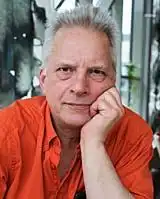
Stefan Stenudd
About me
I'm a Swedish author of fiction and non-fiction books in both English and Swedish. I'm also an artist, a historian of ideas, and a 7 dan Aikikai Shihan aikido instructor. Click the header to read my full bio.
 Attacks in Aikido
 Aikibatto