Aikido AttacksThe striking attacks in aikido. Many more aikido videos on my YouTube Channel. Kogeki, the Attack Techniques in Aikido.Of course, in aikido training the actual aikido techniqe is done by tori, the defender (also called nage), while the attack of the uke is merely a service so that tori can train. Therefore, it is quite common in aikido training that both partners focus almost completely on the tori role, and neglect that of the uke. It can go so far as to a state very near sleep, when an attack is done, as if this is a moment for rest, until again it is time to be tori. Such a way of training is unfortunate in so many ways. Mainly, one's focus soon becomes blurred also in the tori role, and without increasingly advanced attacks it is impossible to advance in one's aikido. We need to be more skilled as attackers, to be able to teach ourselves and each other higher skills in the defense. I do not primarily mean the self defense aspect, but the way (do) of aikido. When attacks get more precise, focused and sophisticated, then they stimulate the refinement of one's aikido, and one's understanding of its nature. When you show just as much care about your uke role, as you do about your tori role, then it will truly be aikido. It's more fun, too, if you devote yourself to be uke, an attacker with the attacker's mind and strategy, when your partner is tori — and then switch to tori mind when it's your turn to do aikido techniques. The shift of behavior is good mental training, indeed, sort of instant acting: immediately switching from one role to its opposite. You'll have twice the fun.
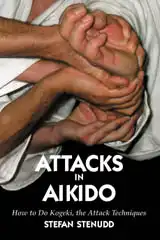
In the photos, I do the attacks, and Tomas Ohlsson at my dojo Enighet in Malmö, is the tori. You find an edited and expanded version of all this in my book Attacks in Aikido.
Stefan Stenudd
AIKIDO PRACTICEIntroductionAikido Techniques — all the basic movesAttacks in Aikido
Tantodori — knife defenseAikiken — aikido sword techniquesJo 31 Kata in four directionsAikibatto sword and staff exercisesAiki — joining energiesKi exercisesAikido Video ClipsAikido PhotosMy aikido dojo in Malmö, SwedenMy aikido seminarsAIKIDO THEORYMy Aikido BioAikido GlossaryTanden, the CenterAikido InksAikido as Self-DefenseRunning a DojoAikido is TrueOsensei and EinsteinAikiWeb ColumnsAikido Books ReviewedDie deutsche Version meines Aikido-Buches onlineAikido på svenskaAbout CookiesMy Other WebsitesCREATION MYTHSMyths in general and myths of creation in particular.
TAOISMThe wisdom of Taoism and the Tao Te Ching, its ancient source.
LIFE ENERGYAn encyclopedia of life energy concepts around the world.
QI ENERGY EXERCISESQi (also spelled chi or ki) explained, with exercises to increase it.
I CHINGThe ancient Chinese system of divination and free online reading.
TAROTTarot card meanings in divination and a free online spread.
ASTROLOGYThe complete horoscope chart and how to read it.
MY AMAZON PAGE
MY YOUTUBE AIKIDO
MY YOUTUBE ART
MY FACEBOOK
MY INSTAGRAM
STENUDD PÅ SVENSKA
|
 Aikido Principles
 Attacks in Aikido
 Aikibatto