Cosmos of the Ancients The Greek Philosophers on Myth and CosmologyHerodotus he historian Herodotus (circa 490-425 BC) traveled extensively in the world known to the Greek at his time, spending what must have been many years on this. He finished writing his History, the book on so much more than the Greco-Persian wars and their preludes, no earlier than 430 BC and it seems to have been known before the year 425 BC.
Contrary to what is the case with most of the Greek literature of that time, his book is quite intact, with its rich information on the lands and lives of Greece and its neighboring states. In a narrative form he treated foreigners no worse than his countrymen, sometimes actually praising the former at the expense of the latter, and contrary to the tradition he avoided involving any divine interference, but showed the events of history as caused by human action.
Indeed, wellnigh all the names of the gods came to Hellas from Egypt. For I am assured by inquiry that they have come from foreign parts, and I believe that they came chiefly from Egypt. He lists some few exceptions: Poseidon, the Dioscuri, Hera, Hestia, Themis, the Graces and the Nereids — names of which the Egyptians had no knowledge, when Herodotus inquired. Those he believed instead to have been named by the Pelasgians, with just one exception, Poseidon, whose name he claims to have Libyan origin. He makes it very clear in his text that he speak of the names of the gods as being imported, but is hesitant to say anything definite about the gods themselves: But whence each of the gods came in to being, or whether they had all for ever existed, and what outward forms they had, the Greeks knew not till (so to say) a very little while ago; for I suppose that the time of Hesiod and Homer was not more than four hundred years before my own; and these are they who taught the Greeks of the descent of the gods, and gave to all their several names, and honors and arts, and declared their outward forms. According to what he states earlier in his text, the deed of Homer and Hesiod was not that of the inventor, but of the messenger, since the names of the gods had already been given by the Egyptians. This Egyptian origin includes also the practices and rituals in connection with the gods: "the Greeks learnt all this from them. I hold this proved, because the Egyptian ceremonies are manifestly very ancient, and the Greek are of late origin." He certainly has a point — in his days Greek culture could still be measured in centuries, while the Egyptian civilization spanned several millennia. Afore this, Hesiod expressed humble admiration in his book, not only in regard to the gods and their worship.
LiteratureHerodotus, History, volume I, 2.49, translated by A. D. Godley, Loeb, London 1981.
© Stefan Stenudd 2000
The Greek Philosophers
AristotleIntroductionAristotle's LifeTimelineAristotle's PoeticsAristotle's CosmologyAbout CookiesMy Other WebsitesCREATION MYTHSMyths in general and myths of creation in particular.
TAOISMThe wisdom of Taoism and the Tao Te Ching, its ancient source.
LIFE ENERGYAn encyclopedia of life energy concepts around the world.
QI ENERGY EXERCISESQi (also spelled chi or ki) explained, with exercises to increase it.
I CHINGThe ancient Chinese system of divination and free online reading.
TAROTTarot card meanings in divination and a free online spread.
ASTROLOGYThe complete horoscope chart and how to read it.
MY AMAZON PAGE
MY YOUTUBE AIKIDO
MY YOUTUBE ART
MY FACEBOOK
MY INSTAGRAM
MY TWITTER
STENUDD PÅ SVENSKA
|
 Cosmos of the Ancients
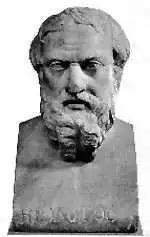 Regarding the gods and the rites of their worship, he was convinced of practically all of it being imported from Egypt to Greece. He starts, almost discreetly, in the 49th chapter of the second book: "For it was Melampus who taught the Greeks the name of Dionysus, and the way of sacrificing to him." Next, in the following paragraph, he broadens the revelation immensely: