Franz Riklin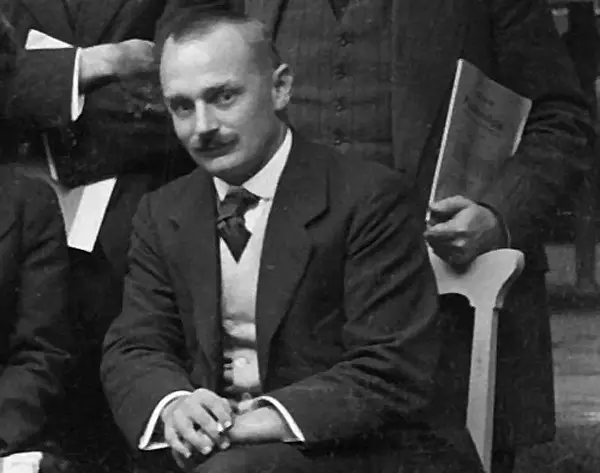
His theories about mythology and religion examined by Stefan Stenudd
His son with the same name, on the other hand, was analyzed by Jung and joined his movement to remain active with it all his life. The father's contributions were not that noticed, except for the experiments he did with Jung, but while still in the Freudian sphere he wrote a study on fairy tales discussed below. It was published already in 1908 and follows Freud's doctrine rather slavishly, expressing great praise for him. It was at a time when also Jung was still a faithful pupil of Freud. The English translation of the book appeared in 1915.
Sex in Fairy TalesRiklin goes through a number of fairy tales to extract their sexual symbolism and patterns conforming to the Oedipus complex. He finds it surprising how great a role the sexual plays in fairy tales,[2] but that can come as no surprise since he selects fairy tales of the girl-meets-prince or boy-meets-princess kind. Not that they are hard to find. These stories speak about love and living happily ever after, but of course there is sexual innuendo to be found in them.Riklin sees it just about everywhere, thanks to his generous assigning of sexual symbols, some more obvious than others. The serpent is not far-fetched as a symbol of the male organ, though Riklin admits that not every fairy tale serpent is a sexual symbol.[3] Also, the frog might be a symbol of fertilization in some stories, such as when transformed to a prince by being kissed on the lips.[4] At that event it may also be reasonable to see the woman's mouth as a symbol of her sexual organ.[5] Less convincing is a dream analysis where the long street is a passage in the female genitals.[6] Questionable is also the statement that dragons, serpents, giants, devils, and monsters commonly play the same role, by which he means the sexual innuendo.[7] The sexual symbols Riklin sees are to him evidence of infantile sexual theories, which have led to the view that "this masking of sexual processes took its origin in the telling of fairy stories by women."[8] It is unclear if he shares this peculiar view. As for the presence of the Oedipus complex in those fairy tales, it is a matter of interpretation, and Riklin is of course quite biased in his. Franz Riklin is included here because of his presence in the early group around Freud and Jung, but also because his text discusses fairy tales as highly comparable to myths:
Fairy tales bring two sets of symbols from different sources together:
Riklin mainly compares the content of fairy tales to the wish dreams of which Freud spoke in his The Interpretation of Dreams, and explains how a fairy tale is born:
He gives examples of fairy tales with evil step-mothers and incestuous kingly fathers, both usually meeting a well-deserved end. These stories may certainly share a few traits with that of King Oedipus, but also significant differences. The fairy tale heroes are reluctant, revolting, and escaping. That speaks not of some unconscious urge to kill one parent in order to mate the other, but simply of self-defense. The plot pattern of the kind of fairy tales Riklin utilizes is quite plain and obvious: A pleasant situation is interrupted by threats and ordeals, which are finally overcome to reach an even pleasanter situation. Things get worse before they get better. All's well that ends well.
That Is Any StoryAny story shows much of the same structure or it would fail to attract an audience. A situation going from good to better to best might be wishful thinking, but as a story it is just boring. One going from bad to worse is neither appealing nor that much less boring. The only working order is from bad to good, or from good to bad to very good.What Riklin sees as signs of the inner workings of the unconscious, are narrative necessities to make a story exciting. He is far from alone among the psychoanalysts to ignore this. There is also the type of story called tragedy, which was favored by Aristotle as well as many playwrights. It goes from good to bad, ending with catastrophe. It may seem strange that such dramas belong to the most popular ones in the history of theater and literature, although they can hardly be seen as any kind of wishful thinking. Aristotle explained it as catharsis, the emotional release it brought the audience. Tragic endings are rare in fairy tales, but they do exist. They often display a harsh moral — the hero fails utterly and therefore meets a bitter end. Mythology is full of them, usually with the pattern of the Orpheus and Eurydice myth: When bringing his love back from the realm of the dead, Orpheus could not resist looking back at Eurydice on the way, thereby losing her forever. In the Bible, Lot's wife met a similar fate, turning into a pillar of salt as she looked back when fleeing Sodom.[14] Although such fairy tales are rare to find among all the ones with happy endings, they present something of an anomaly to Riklin's wish-fulfillment principle. But a great number of fairy tales definitely conform to it — also those that end happily without any wedlock or love affair at all. This should have told Riklin that though the wish-fulfillment is very common in fairy tales, it rarely includes something fitting the Oedipus complex, in spite of his tendentious selection of stories.
Notes
Freudians on Myth and Religion
This text is an excerpt from my book Psychoanalysis of Mythology: Freudian Theories on Myth and Religion Examined, from 2022. The excerpt was published on this website in February, 2026.
MYTH
IntroductionCreation Myths: Emergence and MeaningsPsychoanalysis of Myth: Freud and JungJungian Theories on Myth and ReligionFreudian Theories on Myth and ReligionArchetypes of Mythology - the bookPsychoanalysis of Mythology - the bookIdeas and LearningCosmos of the AncientsLife Energy EncyclopediaOn my Creation Myths website:
Creation Myths Around the WorldThe Logics of MythTheories through History about Myth and FableGenesis 1: The First Creation of the BibleEnuma Elish, Babylonian CreationThe Paradox of Creation: Rig Veda 10:129Xingu CreationArchetypes in MythAbout CookiesMy Other WebsitesCREATION MYTHSMythology in general and creation myths in particular.
TAOISMThe wisdom of Taoism and the Tao Te Ching, its ancient source.
LIFE ENERGYAn encyclopedia of life energy concepts around the world.
QI ENERGY EXERCISESQi (also spelled chi or ki) explained, with exercises to increase it.
I CHINGThe ancient Chinese system of divination and free online reading.
TAROTTarot card meanings in divination and a free online spread.
ASTROLOGYThe complete horoscope chart and how to read it.
MY AMAZON PAGE
MY YOUTUBE AIKIDO
MY YOUTUBE ART
MY FACEBOOK
MY INSTAGRAM
STENUDD PÅ SVENSKA
|
 Archetypes of Mythology
 Psychoanalysis of Mythology