Otto Rank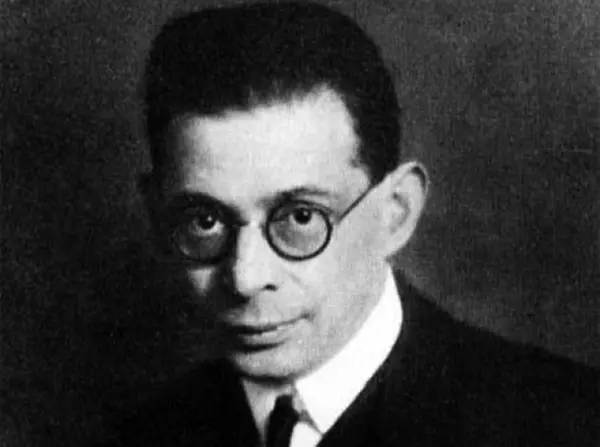
His theories about mythology and religion examined by Stefan Stenudd
His literary debut was with The Artist in 1907, which presented a psychoanalytical perspective on artists. That continued to be one of his favorite themes, along with finding psychoanalytical patterns in myths. Already in 1906, he was hired as a secretary for the Psychological Wednesday Society, later renamed the Vienna Psychoanalytic Society, although he still lacked a university degree.[1] Encouraged by Freud, he reached his PhD with The Lohengrin Saga in 1911. That was the very first dissertation to apply a psychoanalytical method. It was with his 1924 book The Trauma of Birth that he fell out of grace with Freud and his group of psychoanalysts. They criticized the book for deviating from Freudian dogma. Rank left the organization and Vienna, moving first to Paris and later to the USA. He died at the age of 55 in 1939, just a month after the death of Sigmund Freud.
The Birth of the HeroIn 1909, Otto Rank published The Myth of the Birth of the Hero, where he went through a number of myths, fairy tales and ancient works of fiction to extract a common pattern regarding the birth and emergence of hero figures. He found this:
The most strained of those arguments is when he uses Freud's theory about reversal to claim that an account of events may be interpreted as its opposite.[4] Though sketching a few theories of explanation to this pattern of the hero myths, Rank is not interested in that aspect, nor does he care much for trying to trace the origin of the hero myth:
Myths are expressions of human imagination, especially that of the childish mind since "this imaginative faculty is found in its active and unchecked exuberance only in childhood."[8] Therefore, Rank argues, the myths mainly express the psychological urges of children, also those of psychoneurotic adults, who are shown by the teachings of Freud to have remained children, in a sense.[9] In these adults, the childish emotions are preserved and exaggerated, which make them easier to analyze than the somewhat chaotic minds of children. So, the child inside the adult is revealed by the myth he composes:
Nourishing the idea of being a step-child or adopted, "usually under the influence of story books,"[13] brings the child some relief. Echoing Freud's view on the sexes, Rank sees this tendency more prominent in boys than in girls: "The imaginative faculty of girls is possibly much less active in this respect." To no surprise, he presents no evidence of it. The child's conception of not living with its real parents is fed by a wish to replace them:
When puberty approaches, an element of ambition emerges in the child, with the wish to replace the parents who are now despised with others of a higher social rank.[16] This is also shown in the pattern of the hero myth, where his hostility is mainly targeted at the father.[17] The hero's rebellion against the father is explained as inevitable, often even commendable. That becomes an excuse for the revolt against the father in general, a relief of which the individual is in dire need: "This revolt had burdened him since his childhood, as he had failed to become a hero."[18] Rank ends his text by comparing the hero myth to the mentality of the anarchist, claiming that "every revolutionary is originally a disobedient son, a rebel against the father."[19] The anarchist may follow in the footsteps of the hero when persecuting or even killing a king, but for both the true motivation can be questioned:
One Can DreamCertainly, there are many similarities between all kinds of myths from different times and cultures, whether they tell a hero's story or not.There are also differences. Not even all the myths Rank lists in his book have the set of patterns he claims to be true for hero myths. In spite of that, he makes no particular effort to explain why some of those myths lack one or more of those ingredients. Nor is he completely convincing when he argues for similarities where a reader must initially doubt them. In his eagerness to point out psychological significances according to the Freudian doctrine, he is quick to allow things to represent something other than what meets the eye. For example, he explains the frequent event of a baby put in some vessel in a river or lake:
According to Jung, he explains, this mythical component is "the fantasy of being born again, to which the incest motive is subordinated."[22] This wish of returning to the mother's womb and rebirth from it is something Jung wrote about more than once. Still, it is strange that a baby would need that rebirth process. In the paradoxical worlds of myths and dreams, it would be just as plausible to have a grown man go through it — and that would make more psychological sense. Some of Rank's patterns of hero myths are uncontroversial, such as the very common theme of a boy from meager circumstances growing up to get the princess and half the kingdom. Countless fairy tales tell the same story. No mystery there. Anyone who was not already from birth blessed with these fortunes would be charmed by the prospect. There is no psychological need for it to be an expression of father-envy. Simply put, a much wider audience would find it easier to identify with a hero born into poverty than one already vastly privileged from the start. The privileged have always been a minority, or it wouldn't be a privilege. The same thing can be said for the plot of the commoner child revealed to be of utter nobility. It is a dream scenario in no need of a deeply frustrated relation to one's parents. The frequent recurrence of those motifs is not more of a mystery than that we love to hear about someone winning the lottery but don't care much about one losing — although the latter is so much more common than the former. The frequency in myths of a child abandoned by the parents, whether it is in a box on the water or in another manner, may seem peculiar at first, but it is tragically far from unheard of in real life. Through history, a multitude of children have been deserted by their parents, for different reasons and with different degrees of cruelty. It was a familiar occurrence to people of the past and sadly still is. A story aiming to describe the path from destitution to exaltation was likely to start with an abandoned child, so as to begin with utter misery. In order to attract its audience, a story needs to work with extremes. Who cares about a prince growing up to be king, or a rich man's son inheriting the riches? It is what they do. But when a pauper gets to be king or a beggar strikes gold — that raises our eyebrows and our hopes, although we know it to be oh, so rare. We foster dreams about success because we would like to succeed. There is no hidden message to it. What remains is the question of the hero's return to the original parents, either to elevate or to condemn them. It can easily be understood as tying the knots of the story. If the hero was abandoned by his parents in the beginning of the story, the audience would want to know what happened to them. If they treated their child cruelly, we would expect vengeance. But if they left their child out of unfortunate necessity, we want reconciliation. It is for the sake of completing the story, and not an expression of some unconscious dynamics between children and parents. Rank's psychoanalytical approach to hero myths is not implausible, but improbable compared to the primary principles of a narrative. A story has its own necessities and mechanics that should not be neglected in the analysis of it. When that has been considered, little remains to justify the psychoanalytical explanation of it. Although Rank's conclusions about the hero myth have their flaws, he must be credited for being so early among the psychoanalysts to pay attention to it and recognizing its significance. Later, it would be the archetype of central importance to Jung, and after that even more famously of Joseph Campbell.
The Interpretation of DreamsThe outstanding evidence of Freud's great appreciation of Otto Rank was that he allowed his apprentice to contribute to a new edition of The Interpretation of Dreams, which was Freud's major work. The 4th edition, published in 1914, contains two texts by Rank and even credits him as a co-writer of the book. The two chapters written by Rank are "Dreams and Poetry" and "Dreams and Myth."[23]When Rank fell out of Freud's grace after deviating from his doctrine in the mid-1920's, it was proven by the same chapters being omitted from the following edition of the book — the 8th, released in 1930 — without any explanation. They have not reappeared in the book since. Below, a translation of the two texts from the 7th edition of 1922 is used.
Dreams and PoetryThe first of those texts, "Dreams and Poetry," starts by comparing dreams to the creation of poetry, stating that there are "deeper connections between the exceptional abilities of 'sleepers' and the 'inspired' soul."[24] Rank then uses a bundle of quotes mainly from poets to show their inklings of the functions and meanings of dreams in ways similar to Freud's doctrine. It is their poetic inspiration leading them to these realizations:
In the last case he takes support from the Swedish author August Strindberg, quoting him about the theosophist notion that things observed from the astral plane look upside down: "That is why dreams are often to be interpreted in reverse, through antiphrasis, and in Swedenborg there is an indication of this perverted way of seeing things."[26] Rank takes evident delight in this support from Strindberg, and from others, for Freudian dream analysis:
The primary problem with his speculations lies in the method of gathering quotes from the veritable cornucopia of our literary history. From such an abundance of material it is easy to find confirmations for just about any theory — or dismissal of it. Standing out from the minds of the poets is not so much the meanings of dreams as their meaninglessness. Actually, this is something dreams are said to share with life as a whole. Shakespeare has Prospero say in The Tempest: "We are such stuff as dreams are made on, and our little life is rounded with a sleep."[29] Edgar Allan Poe agrees:
Poe, too, had his ideas about the true nature of dreams and their relation to what we call reality:
Dreams and MythRank's second chapter, "Dreams and Myth," is a mere 17 pages and does little more than repeat what he and Karl Abraham had stated about the psychology of myths, as discussed above.He begins by declaring that dreams are significant for the formation of myths and fairy tales.[34] That would necessarily make myths as personally specific as dreams are, but Rank then speaks of a folk psychology creating myths from a culturally shared history and symbolism. There is "a genetic perspective that allows us to conceive of myths as the distorted remnants of wishful fantasies of entire nations, as it were the secular dreams of mankind in its youth."[35] Still, it is all rooted primarily in the personal relation to parents, sexuality, and the Oedipus complex. For some myths, this relation is near at hand, but less obvious in other cases. To Rank it means that the myth has been distorted. As an example of this, he mentions the widespread "brother tales," which simply substitute the brother for the father in the same old Oedipal rivalry. But then there are brother tales where one avenges the other. That would be an anomaly, but Rank explains it:
Rank also touches on creation myths, which he regards from a psychoanalytical perspective as "infantile sexual curiosity concerning birth processes and its attempts, projected onto the universe, to attain knowledge."[37] Then certainly the common creation myth motif of world-parents killed by their son reflects "all the ur-motifs of the infantile Oedipus complex in a wider sense." The influence between dreams and myths is reciprocal. Rank mentions the psychoanalytical experience that people's dreams may make use of familiar themes from fairy tales:
In a humble footnote Rank states something of fundamental importance, unfortunately without expanding on it. Discussing Aethiopica by Heliodorus, where Thyamis has a dream right when the rooster crows, Rank explains: "Dreams toward morning were held to be true."[39] That is the hypnopompic state of lucid dreaming at the moment of waking up, which is discussed in the chapter about Erich Fromm. Psychoanalysts should really ask themselves if not these types of dreams are the only ones to which they have ever had access. Since we are unable to remember dreams without waking up from them, maybe those we do remember are all created more or less by the conscious mind at the process of waking up.
The Trauma of BirthIn 1924 Otto Rank released the book that would exclude him from Freud's entourage and soon also from Freud's support — The Trauma of Birth, where Rank claimed the experience of birth to be the first and foremost human trauma. Thereby, he dethroned the Oedipus complex from that position, albeit indirectly. So, the reaction from Freud and his loyal followers was no surprise.It was a surprise to Rank, though, judging from the explicit and repeated reverence he shows Freud in the book. It is close to worship. He ends his preface by humbly declaring that "we owe to the instrument of investigation and to the way of thinking which Freud has given us in Psychoanalysis."[40] Through the text, Freud is praised for his "power of observation," which is "brilliant," "keen," and "clear," as is his thought. His accomplishment is "stupendous," his objectivity is "remarkable," and his discovery has "courage."[41] Although Rank's theory of the birth trauma contradicts Freud's doctrine to quite some extent, he never even once states so, nor does he raise any other objection to Freud's ideas. He refers to Freud's theories and discoveries as nothing less than canonical. Rank's belief in Freud's continued support is ironic, considering how he time and again criticizes Jung and towards the end of the book speaks, with evident reference to him, about "single fellow-workers" who were close to Freud but took to flight:
Regardless of its deviation from Freudian doctrine, Rank's theory about the birth trauma is interesting. If there is any natural occurrence that we all share, which would have the potency of causing a trauma from early infancy and on, the moment of birth is the most likely candidate. It is a passage with the dignity only comparable to what awaits at the other end of life. Rank calls it the ultimate biological basis of the psychical.[43] We carry with us the traumatic experience of birth and long for what was before it — the comfort and peace of the mother's womb. The longing back to the womb was also suggested by Rank's fellow disciple of Freud at the time, Sándor Ferenczi, in Versuch einer Genitaltheorie,[44] published the same year as Rank's book. It is referred to in Rank's text, though using a congress report from 1922.[45] Rank expresses admiration for Ferenczi's claim that "the man, penetrating into the vaginal opening, undoubtedly signifies a partial return to the womb." Rank does not insist that the birth trauma is based on an actual memory of the event. It could just as well be what he calls a primal phantasy, "it is a matter of indifference whether the scene was experienced or not."[46] Rank's purpose with his book is to arrange synthetically "the whole psychical development of man as shown from the analytically recognized importance of the birth trauma and in the continually recurring attempts to overcome it."[47] But he gets carried away. Rank sees the birth trauma and the longing back to the womb symbolically represented by just about everything in human culture and thought:
It is not unreasonable to see the expulsion from Paradise as a symbol of the birth trauma,[51] maybe also to regard the crucifixion and resurrection of Jesus as "a repetition and reproduction of the process of birth, ethically and religiously sublimated in the sense of a neurotic overcoming of the primal trauma."[52] But explaining Nirvana, "the pleasurable Nothing," as "the womb situation" is stretching it.[53] So is his over-simplified idea of religion, hardly applicable outside Christianity and maybe Islam:
Rank also has an explanation to homosexuality: "It is based quite obviously in the case of the man on the abhorrence of the female genitals, and this because of its close relation to the shock of birth."[57] Why this abhorrence would only strike a minority of men, he neglects. To the unconscious, any room and house symbolizes the womb,[58] whereas all implements and weapons "really directly imitate the masculine sexual organ."[59] Even death itself is to the unconscious an everlasting return to the womb.[60] Rank makes more sense, relatively speaking, when he uses his theory on astrology:
The hero, to whom Rank had already devoted a book, represents a type who "seeks to overcome an apparently specially severe birth trauma by a compensatory repetition of it in his deeds."[66] Only the youngest of the brothers can be the hero, since no one after him has occupied the place, in the mother.[67] Therefore, only he can return to it. Touching on the Oedipus saga, Rank acknowledges Freud's principle of the Oedipus complex, but by introducing the man-swallowing sphinx into the equation he makes the birth trauma overrule the complex:
Freud's ReactionFreud did not take long to rebut Rank's claims. In 1926, two years after Rank's book, he published Inhibitions, Symptoms and Anxiety, where he dismissed Rank's birth trauma all but completely. His main argument is that it is very unlikely for anyone to have a remaining sensory impression of the time of birth.[69]Freud also objects to the almost paradoxical elements of Rank's theory, which leave room for just about any interpretation:
Later in his book he states that his main objection to Rank's theory is that "it floats in the air instead of being based upon ascertained observations."[71] Freud is not wrong there, but the same objection can be raised about a number of his own claims, as discussed earlier in this book.
Death, ThoughFreud's major objection, about the birth not being memorable, is probable but not ascertained, as he himself admits. Rank, though, implies even more. Since his theory is based on not just the birth trauma but also the longing for a return to the mother's womb, it suggests some kind of memory of the time before birth. Without a pleasant memory of the existence in the womb, we can't long for a return to it.It was not scientifically confirmed at the time of Rank's and Freud's books, but there are things the fetus perceives, especially at the time approaching birth. Its hearing is particularly developed, even to the point that it can recognize words and differentiate between voices.[72] So, the basic condition for Rank's theory has actually been confirmed. But his idea of a birth trauma is still in need of confirmation, and his far-fetched applications of it are easily disproved. Although we might have at least fragments of memories from our birth, even from the time preceding it, the question is if that would create a longing back to the womb. I dare say that the thought is absurd, if not revolting, to just about all of us. It would be like not wanting to live at all. In order to claim that a traumatic wish of that kind is strong in us all, Rank would have needed to present mightily convincing arguments. He did not. Reading his book, it is hard to escape the impression that he was seduced by the simplicity and strong symbolism of his idea of the birth trauma. He wanted to make his theory as big as he felt it was good. And deep. Being a psychoanalyst, he also had to make it fit that paradigm, with its concept of neurosis and human frustration as the yoke we all carry. Add to that the presumed secret workings of the unconscious. Of course, birth is a major event in our lives. The significance of our very first breath is only equaled by our last. So, there is no mystery in the symbol of it showing up in so much of what we think and do. That does not necessarily mean we have a traumatic relation to it. It happened and we survived it. We move on. Rank would probably have made a better case for a fundamental trauma if he created it around our knowledge of our mortality. We all know that we will die, and there is no escaping it. There are certainly many ingredients in myths and religious doctrines referring to birth, but so many more, with so much more amplitude, regarding death. We don't have to relive our birth in order to overcome it, but we do through life feel an increasing need to come to peace with the certainty of our approaching death. Some religions even have a comforting promise about that as their main attraction. Looking at mythologies, it is certainly evident that they usually speculate about the birth of humankind as well as that of the whole world. The overwhelming majority of deities were also once born, but the big thing about most of them is that contrary to men they do not die. That is the decisive trait setting them apart from humans. Some deities, such as Yahweh, have not even been born but were around forever. Still, their lack of birth matters little, since they exist. The thing is that they will continue to exist forever. It is clearly pointed out in the religious source most familiar to Freud and all his disciples, which is the Bible. When Yahweh finds that Adam and Eve have eaten the forbidden fruit, he hurries to expel them from the garden so that they do not get to eat of the fruit that will make them immortal. It would make them his equals.[73] And Christianity is built on the idea that Jesus died for our sins, though he was not dead for more than a couple of days. After that, being divine, he does not die anymore. It is all about death, and not birth. Each of the four Gospels portrays the death of Jesus in detail, but only two of them speak of his birth (and childhood) at all.[74] Even the expression "born-again Christian" is meaningful because of the promise that it leads to eternal life beyond the moment of death. Without this feature, the rebirth would be a short-lived solace. The scarce psychoanalytical focus on death causing frustration is surprising. It may stem from the fact that there is no analytical method to avoid it, probably not even to come to terms with it. It is a quest on which each of us is fundamentally alone, where a therapist has little to contribute.
The DoubleBut Rank did write a book where death and the fear of it are discussed: The Double, first published in 1914, revised and expanded in 1925, the year after The Trauma of Birth was originally released. In this book he traces the concept of a double, as in a shadow or soul or guardian angel, through superstitious beliefs, myths, and fiction.He sees this phenomenon as a narcissistic expression, one that reached obsessive proportion in several of our great authors. E. T. A. Hoffmann, Edgar Allan Poe, Guy de Maupassant, and Fyodor Dostoyevsky are among the ones examined. The fascination with this double can become a fixation, and ultimately lead to death. Rank lists plenty of old superstitions and legends from many cultures, which warn about the danger of seeing one's double, be it in a vision or in a mirror — like the tragic fate of Narcissus caught by his reflection in the water. The double is a dangerous acquaintance. Rank quotes E. T. A. Hoffmann:
It is implied by Rank's reasoning that we all have at least a fragment of that narcissistic urge for self-preservation also into the beyond, and he sees it expressed loud and clear in society:
Through human history, there have been many beliefs in the ever after, and almost as many proposed reasons for them, psychological or in other terminologies. Rank points to the need itself and how it is expressed. It is indeed worth pondering, since this need evidently sidetracks reason and frequently makes people reject even the basic instinct of bodily survival. The deep urge to preserve the self eternally gives clues to how we perceive ourselves — unique and irreplaceable. It also hints at what we need to make our lives meaningful, as well as why we need to do so. Surely, some of the finest human accomplishments in history — and some of the worst — have been nourished by this need. The idea of a double is not far-fetched, nor is an intensified or even hallucinatory impression of one. Rank mentions the actual shadow that light makes appear beside us as one phenomenon stimulating the belief in a double. But it is doubtful that even primeval man would take very long figuring out the cause of the shadow and how it operates. Furthermore, primeval man could see it formed beside even inanimate objects. Fantasies about that physical shadow are more likely to have been amusements, or symbols not meant to be taken literally. What is much more relevant to the idea of the double is the fact that we are able not only to separate ourselves from everything and everyone in our surroundings, but also to reflect upon ourselves and our actions as if being our own audience — and critic, as the psychoanalysts have told us in so many words. As we live our lives, we continuously observe and contemplate ourselves. That is indeed a double. Another one is the self in our dreams. It is not the same one as the person walking around when we are awake, since that one lies still. The mystery of our dreams must be one of the most influential phenomena in creating all kinds of beliefs and conceptions of an immaterial reality. It is another double, and the most puzzling one. Primeval man must have wondered if that self died when the awake self did. At least it was open to speculation, since the truth of the matter was impossible to ascertain. With this book of his, Rank touches on several perspectives of great interest to the study of the human condition. It is significant that he does so with much less of the psychoanalytical terminology and apparatus, than in his books previously discussed. He finds more use for concepts borrowed from art and poetry, from mythical concepts themselves rather than psychoanalytical translations of them. That speaks to his advantage. Otto Rank's thoughts about the double as well as those about the birth trauma are interesting, and his ability to target such essential concepts of the human psyche was impressive. Who knows what they would have led him to, if he were not so tied up by Freud's doctrine, even when dismissed by his teacher? Sadly, he died so soon after Freud did, there was no time for him to explore the freedom it must have given his mind.
Notes
Freudians on Myth and Religion
This text is an excerpt from my book Psychoanalysis of Mythology: Freudian Theories on Myth and Religion Examined, from 2022. The excerpt was published on this website in February, 2026.
MYTH
IntroductionCreation Myths: Emergence and MeaningsPsychoanalysis of Myth: Freud and JungJungian Theories on Myth and ReligionFreudian Theories on Myth and ReligionArchetypes of Mythology - the bookPsychoanalysis of Mythology - the bookIdeas and LearningCosmos of the AncientsLife Energy EncyclopediaOn my Creation Myths website:
Creation Myths Around the WorldThe Logics of MythTheories through History about Myth and FableGenesis 1: The First Creation of the BibleEnuma Elish, Babylonian CreationThe Paradox of Creation: Rig Veda 10:129Xingu CreationArchetypes in MythAbout CookiesMy Other WebsitesCREATION MYTHSMythology in general and creation myths in particular.
TAOISMThe wisdom of Taoism and the Tao Te Ching, its ancient source.
LIFE ENERGYAn encyclopedia of life energy concepts around the world.
QI ENERGY EXERCISESQi (also spelled chi or ki) explained, with exercises to increase it.
I CHINGThe ancient Chinese system of divination and free online reading.
TAROTTarot card meanings in divination and a free online spread.
ASTROLOGYThe complete horoscope chart and how to read it.
MY AMAZON PAGE
MY YOUTUBE AIKIDO
MY YOUTUBE ART
MY FACEBOOK
MY INSTAGRAM
STENUDD PÅ SVENSKA
|
 Archetypes of Mythology
 Psychoanalysis of Mythology