Karl Abraham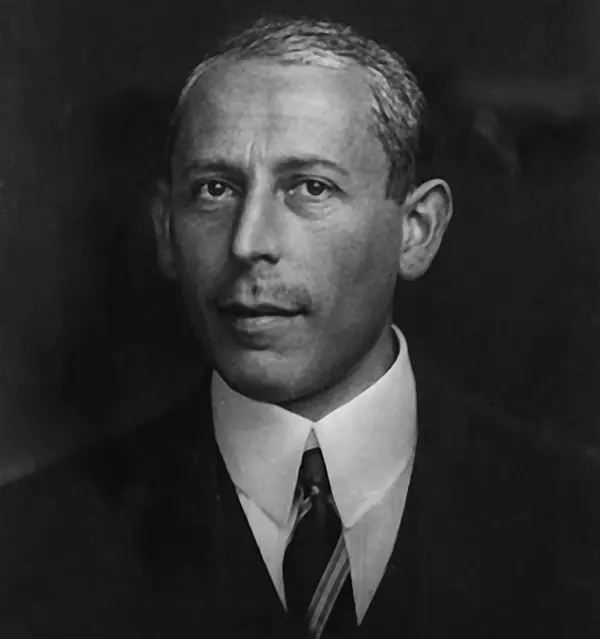
His theories about mythology and religion examined by Stefan Stenudd
Abraham also cooperated for three years with Carl G. Jung in Zurich, at Eugen Bleuler's psychiatric clinic. That was where he was introduced to psychoanalysis. But after disagreements — and some rivalry — Abraham moved to Berlin in 1907 to start his own psychoanalytic practice.[2] He was the first German to do so.[3] He remained there until his death. The inner circle of loyal Freudians, the so-called Secret Committee, which was formed in 1912, had Karl Abraham as one of its initial five members. His loyalty to Freud's ideas is blatantly evident in the book discussed below, Dreams and Myths from 1909, where Freud is referred to as an unquestionable authority on almost every page.
Dreams and MythsAs the title suggests, Abraham compares myths to dreams, regarding both their form and their content. As for dreams, he follows slavishly Freud's understanding of them in The Interpretation of Dreams from 1899. What he proposes in his own book is that the same method can be used for analyzing myths:
Censored DreamsThe dreams that Abraham speaks of, though, are Freudian. He claims, like his teacher, that all dreams are. That means they are in essence the result of wishful thinking: "There lies, at the bottom of every dream, a repressed wish in the unconscious."[5] In the dream it appears under disguise, so that the dreamer does not become aware of the true nature of that wish.There is a mental function taking care of that. Abraham calls it the censor: "The censor does not permit the repressed idea expression by clear, unequivocal words, but compels it to appear in a strange dress."[6] Therefore, dreams bring nothing new, but a distorted version of waking state thoughts, reshaped according to the demands of this inner censor. The censoring distortion of dreams is done by condensation, merging several elements into one or a few, and by what Freud calls displacement, where elements are shuffled like a deck of cards. There is also a secondary elaboration, when the dreamer tries to recall or retell the dream:
In a dream the suppressed wish can be fulfilled in a symbolic way. Furthermore, the most profound wishes in the human psyche are those remaining since childhood. So, dreams represent the fulfillment of repressed wishes, and the deepest roots of them lie in the childhood of the dreamer.[9] To no surprise, Abraham uses the Oedipus myth as an example, claiming that it expresses a suppressed childhood wish of the death of a parent, "the son, for the most part dreams of the death of the father, the daughter of the death of the mother."[10] He compares it to the myths of Uranus and Cronus, who were in battle with their children. These fundamentals in the dreams of children, remaining through life, are the same as for humankind and its evolution from primeval times, expressed in myths:
It Is Always About SexThe theme of the Oedipus myth and many others is to Abraham, as to Freud, one of sexuality in symbolic representation: "Sexual symbolism, I assert, is a psychological phenomenon of mankind in all places and times."[13]To stress this further, Abraham quotes the German writer Rudolf Kleinpaul: "Man sexualizes everything." Abraham meets criticism of the Freudian focus on seeing sexuality expressed in so much of human thought and fantasies, by stating the opposite: "The danger of underestimating appears to me to lie much nearer."[14] He goes on to see sexual symbols just about everywhere in dreams as well as myths. In the case of the latter, he gives the example from Genesis, where the serpent, the seducer of Eve, is a symbol of the male member, and the apple with which Eve seduces Adam represents the fruitfulness of the woman.[15] The blissful existence in Paradise before the fall is a childish wish. He quotes Freud: "Paradise is nothing but the mass phantasy of the childhood of the individuals."[16] Of particular interest is the fact that Adam and Eve were naked and not ashamed. It is something we all dream of being, without scorn from others, Abraham states, again referring to Freud's book about dream interpretation. Adults refrain from doing so, but "children take great pleasure in showing themselves naked."[17] As additional proof of human fixation with sexuality, he gives examples from language, such as the grammar in German and other tongues applying gender even to inanimate objects, or the sexual innuendo of numerous words and expressions, e.g., to plow, long, mast, needle, and narrow.[18] Abraham insists:
Analyzing the myth, he leans on the German philologist and folklorist Adalbert Kuhn, "the founder of comparative mythology,"[20] and his book Die Herabkunft des Feuers und des Gottertranks (The Descent of Fire and the Potion of the Gods) from 1859, with a second edition in 1886 simply called Mythologische Studien (Mythological Studies). Kuhn used linguistic comparisons of German names and terms to Vedic ones, and their ancient meanings. But Abraham also sees immediate links to sexual symbolism in the plots of myths, such as Prometheus's gift to mankind of fire. He points out how fire was created in primeval times:
As for fire itself, it is that of the sun in the sky coming and going daily, lightning striking earth from above, and also the fire of life, which is the inner bodily warmth of every living human: "So long as it dwells in the body the body is warm. And like every fire the life-fire also goes out."[23] Several ingredients in the myth point to Prometheus as creator of humankind, meaning that we would have a divine origin. And that is far from unique in mythology. It is a sign of human claim of grandeur:
He compares the Prometheus myth to that of Moses. One brought fire and the other law. The sexual innuendo is found in the rod, "this always recurring symbol in numerous sagas."[26] Moses used his to strike water from the rock. "The symbolic significance of this staff becomes still clearer, when we recall, that it changed into a serpent before the eyes of Pharaoh."[27] The transformation of the staff means the return of the phallus to the quiescent condition. Another biblical figure compared is Samson, who lost his power with his hair, and who in turn relates to Hercules:
In the case of Prometheus, as in just about every myth, the wish is a sexual one about the potency to procreate. It is described as an exclusively male ability, as if women had no significant part in it:
It is highly doubtful, though, that the same misconception was the rule also when Karl Abraham wrote his book. When Oskar Hertwig published his observations of sperm and egg fusion in the sea urchin in 1876,[32] it did not come as much of a surprise, and after it the understanding of the importance of both cells was well established. Other aspects of masculine delusions of grandeur, though, have been more persistent. Abraham goes on to describe the mythological ambrosia or nectar of the gods in Greek mythology, which has a parallel in the Vedic soma. He sees them as representations of semen. In the repression of sexual content in the saga, "the semen gradually becomes transformed into the nectar of the gods."[33] Abraham sees the repressed wish in disguise not only in myth, but in religion as such: "The wish theory of myths is amplified without difficulty to a wish theory of religion."[34] Man identifies with his god. In the monotheistic religions, though, this has in a process of repression become a belief in a caring-for father and the Madonna cult created a caring-for mother. Also, the belief in life after death is nothing but the fulfillment of a wish phantasy.
Myths May Mean what They SayThere is little dispute about the wide presence of sexuality in the human mind and culture. The question is why it would be so elaborately repressed and replaced by more or less obvious symbols of it. This view speaks less of the long history of humankind than of the social norms of the early 20th century Europe in which Abraham wrote his book.Humans reproduce, as do all the animals. This has never been a secret, nor the manner in which it is done and the urges involved. Although European society at the time of Karl Abraham repressed the expression of sexuality and sexual urges, it is quite doubtful that the same could be said about Greece when the myth of Prometheus took form, or myths of other cultures in other eras. It is much more likely that the fire Prometheus brought was just fire and his creation of man was just the creation of man. The myth could very well express what it claims to express, which is an inventive fictional way of explaining how our species emerged and how we got the tool of fire. The pattern is easily recognizable from many myths of creation. One could even toy with the idea that Prometheus's theft of fire from the gods was a fanciful version of one tribe stealing it from another in primeval times, before everyone knew how to make it. The tribe that was bereft of fire would be in an avenging mood, even if the theft was not of fire but merely the technique to ignite it. In any case, assuming a myth to mean something altogether else than what it tells, demands much more evidence than linguistic association and the fact that we are quite obsessed by our sexuality. The light and warmth of fire is in itself something of tremendous importance to humankind since we learned how to create it at will. Then there is the anomaly of so many Greek and other myths of old, dealing much more outspokenly with sexuality. The Greek gods were not discreet, nor were numerous deities of other mythologies. If Abraham's thesis would be correct, then all myths would have been censored and their sexual content suppressed. To name but a few, Zeus's transformation into a swan to seduce Leda, Poseidon's rape of Demeter and Medusa, and Pasiphaë's mating with a bull would have been hidden behind layers of symbolic alterations. That is certainly not the case. But the relation between dreams and myths remains an interesting one, though not necessarily from a primarily psychoanalytical perspective. The fact that we dream, and most likely have done so since at least the dawn of the human species, is surely a contributing factor to our creation of myths. Maybe many of the myths originated in the oral sharing of dreams and daydreams. That would be enough to explain the fantastic ingredients and absurd events of myths. Our dreams have a reality of its own, still today unbound by the laws of physics and immune to reason. The mere fact that we in our heads can experience chains of events that have no outer existence is the prerequisite of any kind of storytelling.
Notes
Freudians on Myth and Religion
This text is an excerpt from my book Psychoanalysis of Mythology: Freudian Theories on Myth and Religion Examined, from 2022. The excerpt was published on this website in February, 2026.
MYTH
IntroductionCreation Myths: Emergence and MeaningsPsychoanalysis of Myth: Freud and JungJungian Theories on Myth and ReligionFreudian Theories on Myth and ReligionArchetypes of Mythology - the bookPsychoanalysis of Mythology - the bookIdeas and LearningCosmos of the AncientsLife Energy EncyclopediaOn my Creation Myths website:
Creation Myths Around the WorldThe Logics of MythTheories through History about Myth and FableGenesis 1: The First Creation of the BibleEnuma Elish, Babylonian CreationThe Paradox of Creation: Rig Veda 10:129Xingu CreationArchetypes in MythAbout CookiesMy Other WebsitesCREATION MYTHSMythology in general and creation myths in particular.
TAOISMThe wisdom of Taoism and the Tao Te Ching, its ancient source.
LIFE ENERGYAn encyclopedia of life energy concepts around the world.
QI ENERGY EXERCISESQi (also spelled chi or ki) explained, with exercises to increase it.
I CHINGThe ancient Chinese system of divination and free online reading.
TAROTTarot card meanings in divination and a free online spread.
ASTROLOGYThe complete horoscope chart and how to read it.
MY AMAZON PAGE
MY YOUTUBE AIKIDO
MY YOUTUBE ART
MY FACEBOOK
MY INSTAGRAM
STENUDD PÅ SVENSKA
|
 Archetypes of Mythology
 Psychoanalysis of Mythology