Sigmund Freud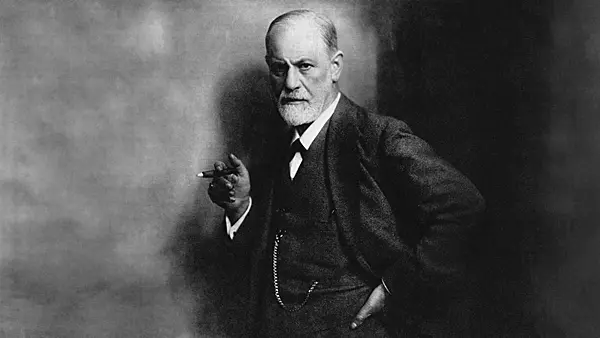
His theories about mythology and religion examined by Stefan Stenudd
Sigmund Freud was born in Moravia in 1856, but his family moved to Vienna only a few years later. In 1881 he graduated as an MD and worked in the Vienna General Hospital for a few years, also researching the clinical uses of cocaine. In 1885-86 he studied in Paris under Jean-Martin Charcot, a French neurologist who made pioneering research into hysteria. The same year Freud returned from Paris, he started his own practice, where he treated nervous diseases and focused increasingly on psychology. In 1902 he was appointed professor extraordinaire of neurology at the University of Vienna, a position he held until he left for England in 1938, to escape Nazism. In 1896, the same year his father died, Freud used the term psychoanalysis for the first time in a printed text. It was in an article about neurosis in a French magazine on neurology.[1] By the very end of the century, in November 1899, Die Traumdeutung (The Interpretation of Dreams) was published, but scarcely noticed for the first few years. An English translation was released in 1913.
There are three books in which Freud treated the subjects of myth and religion at depth. Totem and Taboo in 1913 presented theories that contradicted Jung's emerging models of explanation. In 1927 Freud published the essay The Future of an Illusion, where he discussed the origin of religion and clearly confessed to his own atheism. Moses and Monotheism, in which he persisted with the ideas presented in the previous texts, was published in 1939, the same year Freud died. His book from 1930, Civilization and Its Discontents, is also discussed here although its topic is not mythology but the conflict between individual urges and social norms. Still, it treats religion, its emergence, and effects, which is why it should not be passed by.
Notes
Sigmund Freud on Myth and Religion
Freudians on Myth and Religion
This text is an excerpt from my book Psychoanalysis of Mythology: Freudian Theories on Myth and Religion Examined, from 2022. The excerpt was published on this website in February, 2026.
MYTH
IntroductionCreation Myths: Emergence and MeaningsPsychoanalysis of Myth: Freud and JungJungian Theories on Myth and ReligionFreudian Theories on Myth and ReligionArchetypes of Mythology - the bookPsychoanalysis of Mythology - the bookIdeas and LearningCosmos of the AncientsLife Energy EncyclopediaOn my Creation Myths website:
Creation Myths Around the WorldThe Logics of MythTheories through History about Myth and FableGenesis 1: The First Creation of the BibleEnuma Elish, Babylonian CreationThe Paradox of Creation: Rig Veda 10:129Xingu CreationArchetypes in MythAbout CookiesMy Other WebsitesCREATION MYTHSMythology in general and creation myths in particular.
TAOISMThe wisdom of Taoism and the Tao Te Ching, its ancient source.
LIFE ENERGYAn encyclopedia of life energy concepts around the world.
QI ENERGY EXERCISESQi (also spelled chi or ki) explained, with exercises to increase it.
I CHINGThe ancient Chinese system of divination and free online reading.
TAROTTarot card meanings in divination and a free online spread.
ASTROLOGYThe complete horoscope chart and how to read it.
MY AMAZON PAGE
MY YOUTUBE AIKIDO
MY YOUTUBE ART
MY FACEBOOK
MY INSTAGRAM
STENUDD PÅ SVENSKA
|
 Archetypes of Mythology
 Psychoanalysis of Mythology