Géza Róheim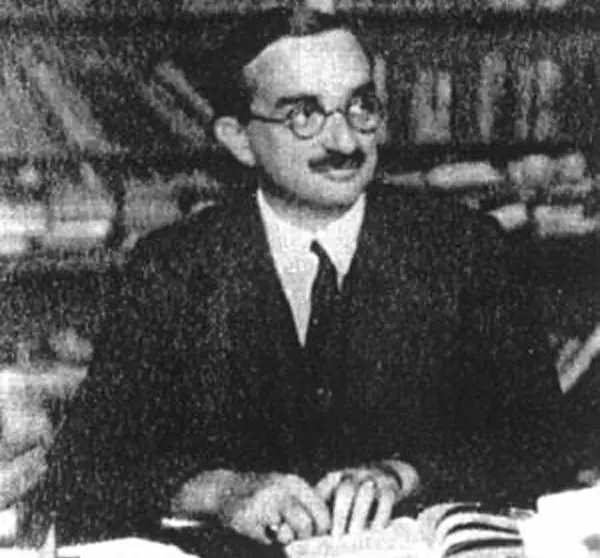
His theories about mythology and religion examined by Stefan Stenudd
In 1928 Róheim made a field expedition to study natives in Australia from the perspective of psychoanalytic anthropology. At the outbreak of World War II in 1939, Róheim had to flee to New York, where he spent the rest of his life. He remained an advocate of the Freudian doctrine of the primal Cyclopean family[1] and the Oedipus complex, although altering some aspects of it in accordance with his anthropological conclusions. By time, he tended to turn his attention more to the importance of the extended childhood of the human species and its consequences on the human psyche and society.
Primitive Man and EnvironmentFor more purposes than the study of mythology, psychoanalysts have frequently used anthropological sources, though not always sufficiently familiar with that discipline. It is quite refreshing to read someone who was.Géza Róheim reasons straightforwardly about Freudian concepts and explains them as consequences of biological conditions and not only some mysterious workings of the darker corners of our minds. This can be seen in his 1921 article "Primitive Man and Environment," published in The International Journal of Psycho-Analysis, where he connects psychoanalytical principles to anthropogeography. With examples from anthropological reports about natives in Australia and elsewhere, he sets out to show that a number of beliefs are expressions "in the language of unconscious symbolism of the unity which connects human life with Nature."[2] Therefore, "all myths are true, only we must know the way to read them."[3] Some of that reading has to be quite imaginative. Róheim claims that most primitive people unconsciously regarded the world around them as a second womb, which he explains: "If man is born with the concept of space it is natural to assume that he must have derived it from his own prenatal experience."[4] This influenced mythology:
He moves on to discuss the spatial concepts of high and low in the human mind and culture. Some are above and looked up to, often the elders whose privileges stem from "an infantile mental attitude towards the father."[7] Children look up to their fathers, literally, and this sense of inferiority remains with them. Furthermore, "these same concepts radiate into space and call forth the concepts of a heaven and an underworld (Hell)." This division of heaven and hell is also expressed in the body of the human being, from the head to the lower cavities.[8] It can also be seen as the conscious personality and the depth of the unconscious. All is due to the psychological mechanism of reversal:
For example, it is far more conceivable that children's perception of their parents is based on such obvious things as their superior size and might, than oedipal urges. Only by growing up to equal measures are the children able to break free of this inferiority, and it is precisely what they eventually do. But childhood certainly makes its marks in the memory and the emotions. It is well known to play an important part in how we perceive and relate to the world also as adults.
The Eternal Ones of the DreamGéza Róheim made frequent use of the Australian natives in his writing on psychoanalytic anthropology, both before and after his field work with them in 1928. Doing so again in 1945 with The Eternal Ones of the Dream, he used both his own findings and those of other writers, who were almost exclusively anthropologists. The book's subtitle is self-explanatory: A Psychoanalytic Interpretation of Australian Myth and Ritual.The myths and rituals interpreted by Róheim are the ones relating to the initiation of boys into manhood, where circumcision is at the core. All through the book, the myths are described as subordinate to the rites and lacking meaning outside of their ritual context. By the myths associated with them, the rites are confirmed and explained. Therefore, Róheim's interpretation of those myths is closely limited to their ritual functions. They are interdependent. His psychoanalytical understanding of these rites and the myths connected to them is the male rivalry described in the Oedipus complex. The boys are removed from the embrace of their mothers to join with the men, at the same time as they are forcefully intimidated, so as not to fight them. The circumcision is a symbol of castration and therefore a threat of it. At the same time, the procedure is in itself a symbolic separation from the mothers. Róheim's analysis is complicated and the particulars of the rites and their myths are given more than one symbolic meaning, sometimes contradictory. Usually, he sees one meaning more or less apparent to the natives and another unconscious meaning hiding beneath it, of which they are not aware. Through his text there is a mixture of psychoanalytic and anthropological or anthropogeographical perspectives on the customs of the Australian natives, which are at best possible to see as parallel. But they often raise the question of how far Róheim would come if he had omitted psychoanalysis completely in his interpretation. In such passages of the text, he tends to make more sense. For example, he explains that the Murngin (nowadays called Yolngu) population of north-eastern Australia thrives in the dry period and suffers in the extremely rainy one. It is mirrored in their mythology: "The great primeval flood is merely a dramatic enlargement of what takes place every year."[9] The symbolism created from these annual changes reflects the opposites:
That makes sense, without any unconscious interference. What is beneficial is celebrated, and what is detrimental is feared. No need for Oedipus. As for the intriguing title of Róheim's book, The Eternal Ones of the Dream, it is derived from the Aboriginal word altjira, which means, "(a) a dream, (b) beings who appear in the dream, and (c) a narrative with a happy end (folk-tale)."[11] It refers to the distant past of the dream time, when the mythical ancestors lived. The concept of the distant past as a dream time is ingenious. We can all relate to it, even in our short individual lifetimes. Distant memories get hidden in a thickening mist, becoming more and more like dreams, which are difficult to remember after waking up. It is a poetic description, and yet spot on. Also, it focuses on the true big mystery of the mind — its ability to create dreams. What the expression is likely to suggest is that the distant past, which no one alive now has experienced, is as elusive and uncertain as a dream. To Róheim, though, it represents a denial of both mothers and fathers:
Always OedipusWere it not for Róheim's persistent return to the Oedipus complex in just about every explanation of myth, ritual, and religion, his discussion on those matters would have been less absurd. But he seemed unable to reach any other conclusion, staying loyal to Freud's paradigm even past his master's death, as can be seen in his 1945 book The Eternal Ones of the Dream, discussed above.Róheim also found the Oedipus complex behind the very origin of religion and the gods, even the formation of society:
Actually, just like his teacher Freud, Róheim fails to prove that the Oedipal complex is at the root of any one of them. But they were too stubborn to even seriously and fairly consider other theories. There must be a term in Freudian psychopathology for such behavior.
Notes
Freudians on Myth and Religion
This text is an excerpt from my book Psychoanalysis of Mythology: Freudian Theories on Myth and Religion Examined, from 2022. The excerpt was published on this website in February, 2026.
MYTH
IntroductionCreation Myths: Emergence and MeaningsPsychoanalysis of Myth: Freud and JungJungian Theories on Myth and ReligionFreudian Theories on Myth and ReligionArchetypes of Mythology - the bookPsychoanalysis of Mythology - the bookIdeas and LearningCosmos of the AncientsLife Energy EncyclopediaOn my Creation Myths website:
Creation Myths Around the WorldThe Logics of MythTheories through History about Myth and FableGenesis 1: The First Creation of the BibleEnuma Elish, Babylonian CreationThe Paradox of Creation: Rig Veda 10:129Xingu CreationArchetypes in MythAbout CookiesMy Other WebsitesCREATION MYTHSMythology in general and creation myths in particular.
TAOISMThe wisdom of Taoism and the Tao Te Ching, its ancient source.
LIFE ENERGYAn encyclopedia of life energy concepts around the world.
QI ENERGY EXERCISESQi (also spelled chi or ki) explained, with exercises to increase it.
I CHINGThe ancient Chinese system of divination and free online reading.
TAROTTarot card meanings in divination and a free online spread.
ASTROLOGYThe complete horoscope chart and how to read it.
MY AMAZON PAGE
MY YOUTUBE AIKIDO
MY YOUTUBE ART
MY FACEBOOK
MY INSTAGRAM
STENUDD PÅ SVENSKA
|
 Archetypes of Mythology
 Psychoanalysis of Mythology