Erich Fromm: Psychoanalysis and Religion
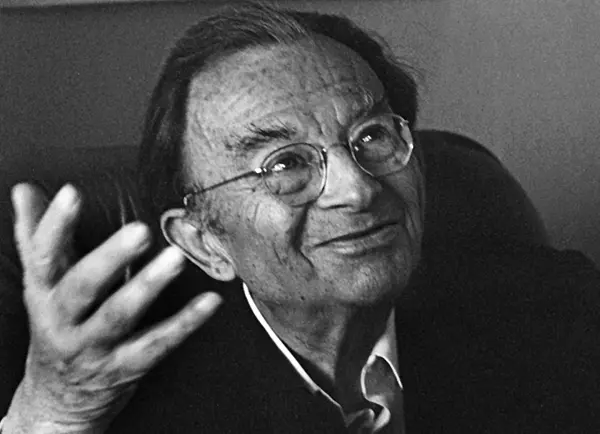
Erich Fromm 1980.

Chapter 4 on his theories about mythology and religion examined by Stefan Stenudd


Nine years after the book The Dogma of Christ, Erich Fromm published another one expressly on the theme of religion, Psychoanalysis and Religion. This was in 1950, a few years after the end of World War II, when Western materialism was blooming and the many comforts of modern industrialism got accessible to the populations of USA and Europe, initially, and soon to many countries around the world.


Archetypes of Mythology. Book by Stefan Stenudd. Archetypes of Mythology
by Stefan Stenudd
This book examines Jungian theories on myth and religion, from Carl G. Jung to Jordan B. Peterson. Click the image to see the book at Amazon (paid link).


Psychoanalysis of Mythology. Book by Stefan Stenudd. Psychoanalysis of Mythology
by Stefan Stenudd
This book examines Freudian theories on myth and religion, from Sigmund Freud to Erich Fromm. Click the image to see the book at Amazon (paid link).


       Fromm looked at this accelerating progress with ambiguity. A new horrific threat had appeared in that "scientists argue whether the atomic weapon will or will not lead to the destruction of the globe."[1] Although less dramatic, there was another threat to civilization, which may even have increased since then — the one of superficiality:


We have the most extraordinary possibilities for communication in print, radio, and television, and we are fed daily with nonsense which would be offensive to the intelligence of children were they not suckled on it.[2]


       Like so much of his writing, Fromm's treatment of religion from a psychoanalytical perspective is more of ethical and political agitation, almost comparable to a polemic pamphlet, than an academic treatise on the subjects of the title. He does describe religious attitudes and beliefs from a psychoanalytical standpoint, but with more words and vigor he argues for what religion should be and what role it should play in individual lives as well as in society. The personal take he allows himself is evident already in the foreword:


The views expressed in these chapters are in no sense representative of "psychoanalysis." There are psychoanalysts who are practicing religionists as well as others who consider the interest in religion a symptom of unsolved emotional conflicts. The position taken in this book differs from both and is, at most, representative of the thinking of a third group of psychoanalysts.[3]

       In the book, he gives no indication of other members of that third group than himself. He is not even clear about his own beliefs, but they seem not to include a deity:


There need be no quarrel with those who retain the symbol God although it is questionable whether it is not a forced attempt to retain a symbol whose significance is essentially historical.[4]


       Also, along the same line of reasoning:


The more man understands and masters nature the less he needs to use religion as a scientific explanation and as a magical device for controlling nature.[5]


       Much like Jung, he complains that psychology has been reluctant to deal with spiritual content and its influence on the psyche. He sees this as a consequence of the discipline defining itself as a natural science: "Academic psychology, trying to imitate the natural sciences and laboratory methods of weighing and counting, dealt with everything except the soul."[6] But that changed with the work of Sigmund Freud, who is portrayed with superlatives:


Then came Freud, the last great representative of the rationalism of the Enlightenment, the first to demonstrate its limitations. He dared to interrupt the songs of triumph of mere intellect.


       It leads Fromm to a conclusion he shares with Jung, which is that only two professional groups are concerned with the soul: priests and psychoanalysts.[7] As for the latter he mentions Freud and Jung, citing two works that he leans on to present psychoanalytical thought on religion: The Future of an Illusion by Freud, which Fromm calls one of his most profound and brilliant books, and Psychology and Religion by Jung, "who was the first psychoanalyst to understand that myth and religious ideas are expressions of profound insights."[8]

       Comparing the theories in those books, though, Fromm is quick to criticize Jung on several grounds, but not at all Freud. He opposes the understanding that Freud would be a foe of religion and Jung a friend of it. Instead, he concludes about their standpoints:


Freud opposes religion in the name of ethics — an attitude which can be termed "religious." On the other hand, Jung reduces religion to a psychological phenomenon and at the same time elevates the unconscious to a religious phenomenon.[9]


       It is doubtful that either of them would agree with this conclusion. Both Freud and Jung definitely related to religion primarily as a psychological phenomenon. Freud was an outspoken atheist, and said so clearly also in The Future of an Illusion. The illusion in the title is that of religious belief.

       Jung stressed, like Fromm, the reality of religion in human minds regardless of the existence of any god. His idea of the collective unconscious, which must be what Fromm refers to, is definitely not one of divine character. He described it more like a highly developed inherited entity, comparable to the instincts although of much greater complexity. Jung was always vague about his own religious beliefs, but clear about them having no bearing on his theories.

       Fromm presents his own definition of religion: "I understand by religion any system of thought and action shared by a group which gives the individual a frame of orientation and an object of devotion."[10]

       This definition is both wide and vague. It would fit patriots of any nation, members of a political party, the fans of a rock group, and the supporters of a football team. Actually, it would fit just about any subculture. Both "frame of orientation" and "devotion" are insufficiently precise to have any meaning in a definition.

       Certainly, there is no fixed definition of religion on which scholars completely agree, but the component of the supernatural and the belief in laws other than those of nature ruling existence are usually included. One might say that religion has elements that are by their nature impossible to prove in the physical world, and therefore need to be a matter of faith.

       But that is exactly what Fromm wants to avoid. He argues for widening the concept of religion to practices and traditions without deities and other elements of pure faith, in order to incorporate ethical and philosophical teachings that would otherwise be hard to include. It becomes clear when he presents a division of religions into authoritarian and humanistic.[11]

       Authoritarian religion is the one with a church deciding the dogma and people are to submit to deities like sheep to the shepherd. Fromm finds an interesting correlation between the deity and humankind: "The more perfect God becomes, the more imperfect becomes man."[12] The elevated deity demands obedience and gives room for little else. Humans are supposed to lower their heads in shame afore the deity.

       In humanistic religion, people are free, even expected, to take care of their own spiritual development: "Man must develop his power of reason in order to understand himself, his relationship to his fellow men and his position in the universe."[13]

       Fromm uses the analogy of the fall and the flood of the Bible.[14] The former, where Adam and Eve are expelled from Eden for breaking God's command, is authoritarian. But in the story of the flood, Noah is working together with God to survive the flood, and after it there is the covenant between God and Noah, where both have obligations. That, to Fromm, is a sign of a humanistic religion.

       He finds humanistic religion in parts of otherwise authoritarian dogma, as well as way outside that territory:


Illustrations of humanistic religions are early Buddhism, Taoism, the teachings of Isaiah, Jesus, Socrates, Spinoza, certain trends in the Jewish and Christian religions (particularly mysticism), the religion of Reason of the French Revolution.[15]


       That is a wide scope. It is particularly odd to find Socrates and Spinoza there, who are otherwise referred to as philosophers.

       Taoism, too, is more readily explained as a philosophy than as a religion. It might even be said about early Buddhism, and probably also for the Culte de la Raison of the French Revolution, which intended to replace Christianity with atheistic devotion towards the ideals of liberty, equality, and fraternity.

       Fromm has widened the definition so much to incorporate this diversity, he might as well have gone the other way and found a concept in which to include religion.

       If so, the concept would not be philosophy, which is also wide and vague to say the least. But moral philosophy or ethics seem accurate for what Fromm discusses. The ideology of it stands out when he describes the true follower of humanistic religion, which is certainly what he advocates:


He must develop his powers of love for others as well as for himself and experience the solidarity of all living beings.[16]


       Love is an ideal that Fromm stresses repeatedly as being at the core of his favorite form of religion:


The command to 'Love thy neighbor as thyself!' is, with only slight variations in its expression, the basic principle common to all humanistic religions.[17]


       He even makes it the optimal goal of psychoanalysis, writing in italics: "Analytic therapy is essentially an attempt to help the patient gain or regain his capacity for love."[18] He seems to think that without the component of love — and that of truth, something even Pontius Pilate knew the need to elaborate upon — there is not much for psychoanalysis to bother about:


The psychoanalyst is in a position to study the human reality behind religion as well as behind nonreligious symbol systems. He finds that the question is not whether man returns to religion and believes in God but whether he lives love and thinks truth. If he does so the symbol systems he uses are of secondary importance. If he does not they are of no importance.[19]


       Though love is in just as dire need of a definition as religion (and truth), Fromm makes no effort at it. It is a pity, since there is a fountain of thoughts on the subject in both philosophy and religion, such as the Greek distinctions between eros, agape, and philia, also discussed for many centuries in Christian theology. Fromm with his take on psychoanalysis should have a go, too.

       Without doing so, he risks falling into the trap of contributing to the "nonsense which would be offensive to the intelligence of children" he warns about. We all know that we should love one another, but even when we do so it often turns out much more complicated than what was foreseen. Love is no fix-all magic potion, and when it is, as in the story of Tristan and Iseult, it ends with disaster.

       Fromm must have some theory about the nature of love, since he states that "psychoanalysis also shows that love by its very nature cannot be restricted to one person."[20] He does not refer to self-love, but to loving just one other person. So, the love he speaks about might be compassion.

       While neglecting to define love with his psychoanalytical tools, Fromm applies them to the inspired sense of oneness that is a common religious experience, such as in the ecstasy of some devoted Catholics and the experience of satori in Zen meditation:


It is this process of breaking through the confines of one's organized self — the ego — and of getting in touch with the excluded and disassociated part of oneself, the unconscious, which is closely related to the religious experience of breaking down individuation and feeling one with the All.[21]


       He adds that his use of the concept of the unconscious here is neither quite that of Freud nor that of Jung. His own definition of the unconscious — again being rather vague, if not circular — is "that part of our self which is excluded from the organized ego which we identify with our self."[22] It contains "both the lowest and the highest, the worst and the best," which is not very clarifying. Still, it clearly deviates from both Freud's and Jung's ideas of the unconscious as something more orderly, with strictly defined functions.

       There are no archetypes in Fromm's unconscious. He does not mention the term in his book. But he does express a similar understanding of the symbols that appear in myths as well as dreams:


Symbolic language is the only universal language the human race has known. It is the language used in myths five thousand years old and in the dreams of our contemporaries.[23]


       In this context, the universality of symbolic language, he makes no reference to Jung but he does mention Joseph Campbell's The Hero with a Thousand Faces, which is in turn inspired by Jung's thoughts. That cannot have been unknown to Fromm, who calls the book remarkable.[24]


Close to Jung

Reading Fromm, it is easy to come to the conclusion that his thoughts on psychoanalysis as well as his ethical agitation bring him much closer to Jung than to Freud. The same goes for his stance on religion and how psychoanalysis can approach it. His reluctance to compare Jung's ideas to his own may not stem so much from their differences as from a sense of competing on the very same arena.

       One crucial element of psychoanalytical theory, where he outspokenly agrees more with Jung than with Freud, is that of the Oedipus complex. To Freud it was definitely an expression of a longing for sexual incest at the root of the male psyche, but Jung found that interpretation far too narrow. He insisted that sexuality, though certainly important, is not that altogether dominant in the psyche and its complications. Often, he stated, it is a symbolic representation of something else.

       Fromm has the same objection, and he even gives Jung credit:


Jung has pointed out the necessity of such revision of Freud's incest concepts clearly and convincingly in his early writings.[25]


       He says early writings, as if Jung would have changed his mind on this point. He did not.

       Furthermore, Fromm suggests that Freud really had a nuanced view on the subject: "Freud himself has indicated that he means something beyond the sexual realm." A source on this would have been fine. I have not seen any sign of it in the writing of Freud that I have gone through.

       Though Fromm praises Freud repeatedly and expresses ambivalence about Jung in his writing, the bulk of that writing shows more similarities to the latter than to the former. Fromm actually gives the impression of being a Jungian at heart, whatever he claims.


Notes

  1. Erich Fromm, Psychoanalysis and Religion, New Haven 1967 (1st edition 1950), p. 2. He made no changes in the 1967 edition, explaining in the foreword: "To my surprise I found that I felt no need for changes in essential points and have no objection to having the book printed again as it stands." Ibid., p. vi.

  2. Ibid., pp. 2f.

  3. Ibid., p. v.

  4. Ibid., p. 114.

  5. Ibid., p. 104.

  6. Ibid., p. 6.

  7. Ibid., p. 7.

  8. Ibid., p. 10.

  9. Ibid., p. 20.

  10. Ibid., p. 21. The italics are Fromm's.

  11. Ibid., p. 34.

  12. Ibid., p. 50.

  13. Ibid., p. 37.

  14. Ibid., pp. 42ff.

  15. Ibid., p. 37.

  16. Ibid.

  17. Ibid., p. 86.

  18. Ibid., p. 87.

  19. Ibid., p. 9.

  20. Ibid., p. 87.

  21. Ibid., p. 96.

  22. Ibid., p. 97.

  23. Ibid., p. 111.

  24. Ibid., p. 112, footnote.

  25. Ibid., p. 82, footnote.


Erich Fromm on Myth and Religion

  1. Introduction
  2. The Dogma of Christ
  3. Escape from Freedom
  4. Psychoanalysis and Religion
  5. The Forgotten Language
  6. You Shall Be as Gods
  7. Shifting Perspectives


Freudians on Myth and Religion

  1. Introduction
  2. Sigmund Freud
  3. Freudians
  4. Karl Abraham
  5. Otto Rank
  6. Franz Riklin
  7. Ernest Jones
  8. Oskar Pfister
  9. Theodor Reik
  10. Géza Róheim
  11. Helene Deutsch
  12. Erich Fromm
  13. Literature

This text is an excerpt from my book Psychoanalysis of Mythology: Freudian Theories on Myth and Religion Examined from 2022. The excerpt was published on this website in February, 2026.
© Stefan Stenudd 2022, 2026


Myths of Creation

MYTH


Introduction
Creation Myths: Emergence and Meanings
Psychoanalysis of Myth: Freud and Jung
Jungian Theories on Myth and Religion
Freudian Theories on Myth and Religion
Archetypes of Mythology - the book
Psychoanalysis of Mythology - the book
Ideas and Learning
Cosmos of the Ancients
Life Energy Encyclopedia

On my Creation Myths website:

Creation Myths Around the World
The Logics of Myth
Theories through History about Myth and Fable
Genesis 1: The First Creation of the Bible
Enuma Elish, Babylonian Creation
The Paradox of Creation: Rig Veda 10:129
Xingu Creation
Archetypes in Myth

About Cookies


My Other Websites


CREATION MYTHS
Myths in general and myths of creation in particular.

TAOISM
The wisdom of Taoism and the Tao Te Ching, its ancient source.

LIFE ENERGY
An encyclopedia of life energy concepts around the world.

QI ENERGY EXERCISES
Qi (also spelled chi or ki) explained, with exercises to increase it.

I CHING
The ancient Chinese system of divination and free online reading.

TAROT
Tarot card meanings in divination and a free online spread.

ASTROLOGY
The complete horoscope chart and how to read it.

MY AMAZON PAGE

MY YOUTUBE AIKIDO

MY YOUTUBE ART

MY FACEBOOK

MY INSTAGRAM

STENUDD PÅ SVENSKA


Stefan Stenudd

Stefan Stenudd


About me
I'm a Swedish author of fiction and non-fiction books in both English and Swedish. I'm also an artist, a historian of ideas, and a 7 dan Aikikai Shihan aikido instructor. Click the header to read my full bio.